Mass Protests in Scotland After Knife Attack in Belfast. Protests erupted in Glasgow, Edinburgh and Ayr following the attack in Belfast. Police tightened security measures, blocked bridges and detained participants. The situation remains tense.
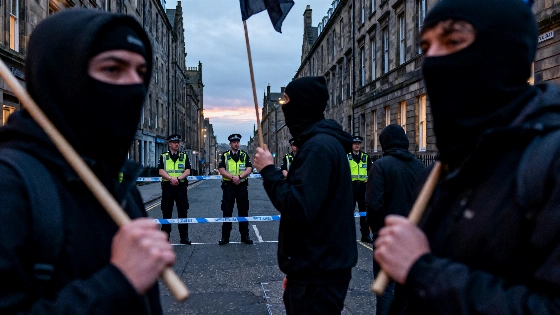
Mass protests took place in major Scottish cities—Glasgow, Edinburgh, and Ayr—sparked by a high-profile knife attack in Belfast. Hundreds of people took to the streets, many covering their faces and carrying flags and banners. In central Glasgow, police were forced to block off several streets and bridges to prevent the escalation of unrest. According to eyewitnesses, protesters tried to break through to central areas but were pushed back by significant police forces.
In Edinburgh, a group of demonstrators gathered at St Andrew's Square and marched along the city's main street, setting off smoke flares and chanting slogans. In Ayr, about a hundred people joined the protest. According to local media in Glasgow, police detained at least one participant and recorded incidents of antisocial behavior. Groups of people wearing balaclavas were seen in several areas of the city, increasing tensions on the streets.
The surge in protest activity was triggered by an incident in Belfast, where a 30-year-old man was charged with attempted murder after a knife attack. According to police, the suspect is a Sudanese national and also faces charges of making death threats and carrying a dangerous item in a public place. The victim suffered serious injuries to the eyes, back, and face. Afterwards, riots broke out in Belfast: trash bins and a bus were set on fire, sparking a wave of protests across the United Kingdom.
In Glasgow, the local organization Stand up to Racism sharply condemned the actions of radical groups, calling the events “disgusting scenes” and urging city residents to unite against violence and hatred. Social media reported assaults on passersby and thefts committed by march participants. The police continue to monitor the situation, blocking key transport routes and increasing patrols in central areas.
According to available data, such protests and clashes in Scotland are not new: in recent years, issues of migration and interethnic relations have regularly led to mass demonstrations and heightened security measures. The UK authorities traditionally respond to such incidents by increasing police presence on the streets and temporarily restricting movement in the most vulnerable areas. Experts believe these events can impact the public atmosphere and policies regarding migration and internal security.