Senior officers from the Guardia Civil and Policía Nacional described daily coordination with Catalan health authorities during the COVID-19 vaccine rollout. The court examines why state police received vaccines later than regional forces.
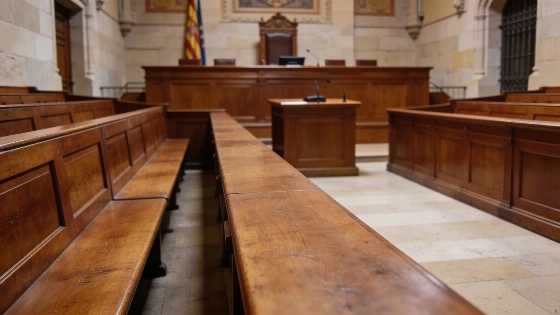
Senior leaders from the Guardia Civil and Policía Nacional testified in Barcelona this week, describing a climate of daily cooperation with Catalonia’s health authorities during the COVID-19 vaccination campaign. Their statements came as part of a high-profile trial examining the delayed vaccination of state police officers compared to their regional counterparts, a case that has drawn attention to the management of vaccine distribution during the pandemic.
Both Esteban Gómez, lieutenant colonel of the Guardia Civil, and Daniel Rapado, chief inspector of the Policía Nacional in Catalonia, told the court that communication with the Generalitat’s health department was “constant and fluid.” According to their testimony, the vaccination plan for state police was developed collaboratively, with daily exchanges and direct contact with Francesc Xavier Rodríguez, then director of services at the health department and one of the accused in the case. Rapado emphasized that decisions were made jointly, not unilaterally imposed, and that Rodríguez was available around the clock to address operational issues.
Neither officer criticized the Generalitat’s handling of the process. Instead, they attributed the suspension of vaccinations to two main factors: initial concerns over the AstraZeneca vaccine and subsequent shortages in vaccine supply. These issues led to a prioritization of officers aged 60 to 65 for inoculation. Rapado noted that the decision to vaccinate state police in their own facilities, rather than in common centers used for local police and Mossos d’Esquadra, was made to maintain tighter control over the process and ensure that officers deployed to public-facing roles had received the necessary doses.
Gómez stated he was unaware of any deliberate slowdown in the vaccination of state police compared to regional forces. He described the arrangement to use their own premises as the most practical solution, even though it required sharing updated personnel lists and facility details with the health department to coordinate logistics. Both officers denied experiencing obstruction from health officials, aside from minor operational incidents.
The trial centers on four former Catalan health officials, including Francesc Xavier Rodríguez, Josep Maria Argimon, Adrià Comella, and former health minister Alba Vergés, all facing charges of alleged misconduct and a possible 12-year ban from public office. The proceedings are being closely watched by police associations and unions, who have joined the case as popular accusers. Notably, the officers testifying said they did not personally know Argimon or Comella, and there was no mention during the session of Vergés or her secretary general, Marc Ramentol.
The events under scrutiny occurred in March 2021, when the vaccination campaign for state police was abruptly halted following reports of adverse reactions to the AstraZeneca vaccine—a move mirrored in several European countries at the time. The officers’ testimony highlighted that, despite the delays, the relationship with both the Interior and Health departments remained constructive, with open channels for resolving any issues that arose.
This case reflects broader tensions in Spain over the management of sensitive data and public sector decision-making, as seen in other recent controversies such as the exposure of confidential government agendas, which sparked debate about privacy and legal protections. For example, a recent incident involving leaked information from José Luis Rodríguez Zapatero’s office reignited concerns about data security and transparency in Spanish institutions, as detailed in this report on privacy breaches in government communications.
Spain’s COVID-19 vaccination campaign was one of the largest public health operations in recent history, with regional governments responsible for logistics and prioritization. The case in Catalonia underscores the complexities of coordinating between state and regional authorities, especially when supply constraints and evolving medical guidance forced rapid adjustments. The outcome of this trial may influence future protocols for inter-agency cooperation and crisis management in Spain’s decentralized health system.