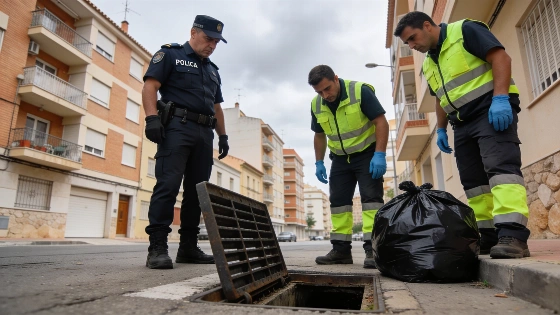
A municipal crew in Valencia uncovered a bag of bones in the Natzaret district’s sewer system. Police and forensic teams are now working to confirm if the remains are human. The find has prompted a full investigation.
Valencia’s Natzaret district became the focus of a police investigation this week after municipal workers cleaning storm drains near the Cantarranas pumping station discovered a bag containing bones that appeared to be human. The unusual find was made during routine maintenance scheduled ahead of the rainy season, a measure intended to prevent flooding by ensuring the drainage system remains clear.
According to sources close to the investigation, the workers immediately notified authorities upon opening the bag and seeing the remains. Officers from the Policía Nacional and forensic specialists arrived at the scene to conduct an initial assessment. Early examinations by the scientific police and the on-call forensic doctor indicated that the bones are indeed human, ruling out the possibility that they belonged to an animal.
The remains have now been sent for detailed forensic analysis to establish their origin and confirm whether they are definitively human. The process is expected to clarify key questions about how the bones ended up in the sewer and whether any criminal activity is involved. Until the results are available, police are treating the case with caution and have not released further details about the condition or age of the remains.
City officials noted that the cleaning operation had been planned months in advance, as part of regular efforts to maintain the city’s drainage infrastructure. Such maintenance is critical in coastal districts like Natzaret, where blocked drains can quickly lead to flooding during heavy rains. The discovery has raised concerns among local residents, though authorities have emphasized that there is no immediate risk to public safety.
This incident comes at a time when law enforcement resources in Spain are already under pressure. For example, recent measures have seen the Guardia Civil suspend new leave for officers in Ceuta and Melilla due to increased border activity, as reported in coverage of police deployments at Spain’s North African enclaves. While the cases are unrelated, both highlight the ongoing demands on police and emergency services across the country.
Forensic identification of human remains in urban environments is a complex process, often requiring DNA analysis and collaboration between multiple agencies. In Spain, such discoveries are rare but not unprecedented, and each case is handled with strict protocols to preserve evidence and determine any legal implications. The outcome of the Valencia investigation will depend on the forensic results, which are expected to guide the next steps for authorities.