Fake Migrant Registration Scheme Uncovered in Linares for Money. Seventeen people have been detained in Linares over a scheme involving fake registration of migrants. Up to 21 foreigners were registered in flats of 80 m². Police are still searching for 26 other suspects.
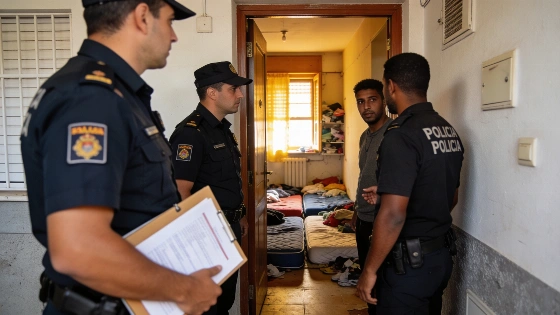
In Andalusia, police have uncovered a large-scale scheme of fictitious registration of migrants: in Linares (Jaén province), 17 people have been detained and another 26 are wanted. According to the investigation, members of the group charged at least 500 euros to register foreign nationals at apartments where they did not actually reside. In some instances, up to 21 people were registered in residential units of about 80 square meters, allowing them to fabricate ties to Spain and gain access to administrative procedures and social services.
The scheme and organization
Operation “Gloria” began after municipal staff noticed a sharp increase in registrations at the same addresses over a short period. The investigation revealed that the scheme was run by an organized group with a clear hierarchy. The key role was played by a Moroccan national, who coordinated the search for apartments, collection of payments, and escorted clients—mainly from Maghreb countries—through all stages of document processing. Tenants were also involved in the scheme, allowing their addresses to be used for fictitious registration in exchange for payment, fully aware that the new 'residents' would not actually live there.
Investigation details
Police have determined that fake addresses were used not only for registration, but also to receive official correspondence, obtain medical records, and apply for residence and work permits. During searches of vacant apartments, documents related to these procedures were found. Investigators believe that the scheme allowed migrants to bypass legalization requirements by using fake information to confirm residency in the country.
Liability and sanctions
All those detained have been charged with document forgery, facilitating illegal migration, and participation in a criminal organization. Administrative proceedings have been initiated against property owners and tenants who provided addresses for fictitious registration: they face fines ranging from €10,001 to €100,000 for each illegal registration. Police note that the investigation was complicated by the suspects being geographically dispersed and language barriers, as well as the fact that some of those involved may have left Spain.
Mass schemes of fictitious registration and document forgery are becoming an increasingly visible issue for the Spanish authorities. Recently, a Barcelona court handed down a verdict in a case involving forged invoices, where most officials were acquitted, while a relative of the former mayor received a real prison term — you can read more about this case in the article about the verdict in the fake documents case in Sabadell.
The operation in Linares continues: police do not rule out further arrests and the identification of additional addresses linked to the illegal registration of migrants. Authorities emphasize that such schemes undermine trust in the registration system and create risks for controlling migration flows.