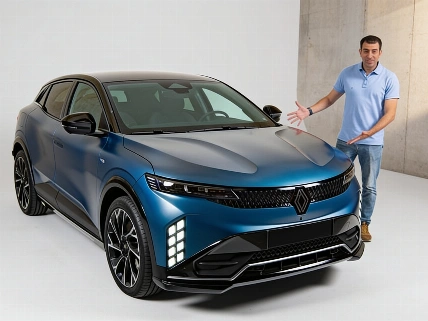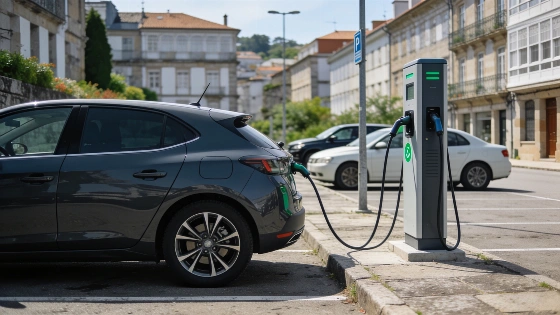
Pontevedra leads Galicia in new electric car sales, but drivers face a shortage of public charging stations. The province's infrastructure trails both the national average and neighboring A Coruña, raising concerns about the pace of Spain's shift to electric vehicles.
Electric cars are hitting Pontevedra’s streets faster than ever, but the province’s charging network isn’t keeping pace. Registrations of new fully electric cars have more than doubled this year, yet drivers still struggle to find places to plug in. The gap between sales and infrastructure threatens to slow the region’s progress in Spain’s push toward electric vehicles.
From January through early September, Pontevedra registered 1,459 new electric cars—18.35% of all new passenger vehicles sold in the province. That’s nearly twice the national average of 10.61% and puts Pontevedra ahead of every other Galician province, including Lugo and A Coruña. But when it comes to charging, Pontevedra falls behind.
As of September 1, 2026, Spain had 52,746 public charging points, marking a 5.49% year-on-year increase, according to Aedive.
Public charging is the main obstacle. FuelObserver reports Pontevedra has just 386 public charging points at 150 locations, with 491 connectors in total. A Coruña has 505 points, while Lugo and Ourense have 232 and 167, respectively. Nationally, Spain has only reached about 17% of its 2030 goal of 340,000 public chargers. Major cities like Madrid and Barcelona skew the average upward, leaving many regions underserved.
The issue isn’t just the number of chargers. Many are low or medium power, and a significant portion are out of service. OBS Business School’s latest report notes that nearly one in four public chargers in Spain doesn’t work, often because of long waits to connect to the grid—sometimes up to three years. Ultra-fast charging stations are especially scarce, making long trips difficult for EV owners.
Even as new electric cars fill showrooms, most vehicles on the road still run on combustion engines. Plug-in cars make up just 2.3% of Spain’s total passenger vehicle fleet, despite electrified models accounting for 21.8% of new registrations in the first half of the year. The gap between new sales and actual use is growing, with infrastructure as the main bottleneck.
According to the Spanish government, as of September 2026, there were 42,318 public charging points nationwide with a combined installed capacity of 2,269,170 kW. However, the development of this infrastructure remains highly uneven across regions, with some areas facing significant delays in grid connection—up to three years in certain cases, compared to 5–12 months in neighboring countries.
Galicia as a whole is ahead of the Spanish average for electric car uptake, with 17.4% of new registrations. A Coruña leads in total numbers, but Pontevedra’s rapid growth is shifting the regional balance. Still, drivers in Pontevedra are waiting for long-promised upgrades, like the 16 ultra-fast chargers at San Simón service area on the AP-9 and another 16 at Caldas, which remain unopened.
Spain’s electric transition is also under scrutiny for plug-in hybrids, as recent data shows their real-world emissions are much higher than official figures suggest. This puts even more pressure on building a reliable charging network for true zero-emission vehicles.
Google/SpainAuto data makes the problem clear: Pontevedra’s demand for electric cars is outstripping its ability to charge them. Without quick investment in high-capacity, working charging points, early enthusiasm could turn to frustration. Ambitious sales numbers matter little if drivers can’t recharge when and where they need to. For Spain’s green transition, the real test is on the ground, not just in the showroom.