Porsche has partnered with Chinese EV maker XPeng to count its CO2 emissions for 2026 and 2027, aiming to comply with stricter EU regulations. The move reflects mounting pressure on European brands as electric vehicle sales slow and regulatory deadlines approach.
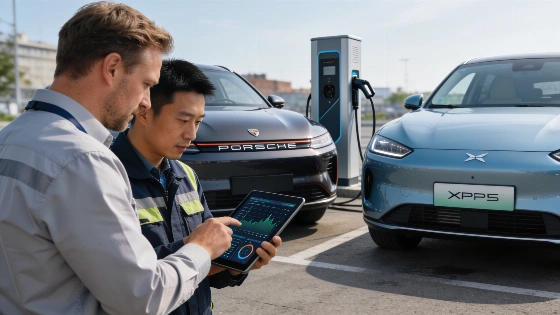
Porsche has taken an unprecedented step to secure its future in the European market, forging a partnership with Chinese electric vehicle manufacturer XPeng to help meet the European Union’s strict CO2 emissions targets for 2026 and 2027. The agreement, confirmed by both companies to the European Commission, marks the first time a European luxury brand has joined forces with a Chinese premium automaker for emissions pooling.
Under the deal, Porsche will exit its existing emissions pool with the Volkswagen Group and instead combine its fleet emissions with those of XPeng. This arrangement allows Porsche to purchase emissions credits from XPeng, whose all-electric lineup helps offset the higher average emissions of Porsche’s sports-oriented models. The move comes as Porsche’s own electric vehicle sales have dropped by 30.8% year-on-year in the first half of 2026, intensifying the challenge of meeting the EU’s fleet-wide limit of 93.6 grams of CO2 per kilometer.
The European Commission had previously eased the timeline for automakers to reach these targets, granting three years instead of one to comply. However, the targets themselves remain unchanged, and failure to meet them could result in fines totaling up to €15 billion across the industry. For Porsche, the partnership with XPeng is a strategic response to both regulatory pressure and shifting market dynamics.
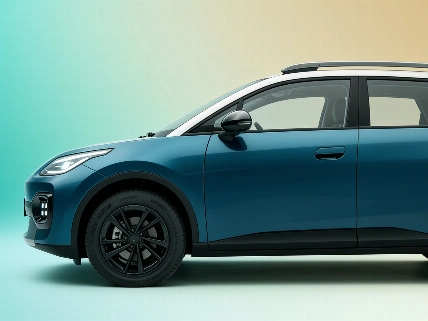
XPeng, meanwhile, is expanding aggressively beyond China, recently launching the G6 and G9 electric SUVs, as well as the P7+ sedan and L03 coupe-SUV, the latter debuting simultaneously in Europe and China. The collaboration with Porsche not only provides XPeng with valuable funding to support its European ambitions but also deepens ties with the Volkswagen Group, which acquired a 4.99% stake in XPeng for €700 million in 2023. Their cooperation has broadened from electric vehicle platforms to include combustion engine development, reflecting the evolving landscape of global automotive alliances.
Financial details of the Porsche-XPeng agreement remain confidential, but the benefits are clear: Porsche gains a lifeline to meet emissions rules without drastic changes to its product lineup, while XPeng secures capital to fuel its expansion. The Volkswagen Group also stands to benefit, as Porsche’s relatively high emissions will no longer weigh on the group’s average calculations.
Porsche is now inviting other manufacturers to join its new emissions pool, provided they sign a confidentiality agreement. Interested parties have until September 5 to participate, potentially reshaping the competitive landscape for compliance in the coming years.
Across the industry, emissions pooling is becoming increasingly common. BMW, for example, has grouped BMW M and Rolls-Royce for 2026 and 2027, while Hyundai’s pool includes its Czech and Turkish operations. Mercedes-Benz leads a closed pool with Mercedes-AMG, Volvo Car, Polestar, and Smart, all linked to Geely. Tesla, meanwhile, heads the largest open pool, which includes Ford, Honda, Mazda, and Suzuki, with applications accepted until December 1. Notably, some major players like Stellantis, Toyota, and Subaru have opted out of these arrangements.
This trend of cross-border alliances is accelerating as Chinese automakers gain ground in Europe. The recent launch of the Geely E2 in Spain, with local production and aggressive pricing, has already put pressure on European brands to adapt, as highlighted in coverage of Geely’s market entry.
As the regulatory environment tightens and electric vehicle adoption faces new headwinds, partnerships like Porsche’s with XPeng may become a blueprint for survival—and success—in the next phase of Europe’s automotive transition.