Portugal's Volta scheme has collected more than 300 million containers. Support workers say some people can make fast cash from the system, while Lisbon warns of growing social costs.
Some people in Portugal are reportedly making up to 40 euros a day by collecting discarded bottles and cans under the country's new refund scheme. The money has been linked to rejected job offers and relapses among some people with drug dependency problems. A programme meant to increase recycling has become a fight over poverty and fast cash in Lisbon.
The strongest claim comes from CASA - Centro de Apoio ao Sem Abrigo. Its director general, Nuno Jardim, said the organisation had met people who gave up plans to start work because collecting Volta containers brought in more money right away. Making 40 euros in one day requires about 400 returned bottles or cans.
Volta is not a Lisbon-only initiative: the deposit-return scheme operates across mainland Portugal, the Azores and Madeira.
That figure puts the dispute in practical terms. It should be seen as a calculated maximum tied to a very large number of returned containers, not as an independently confirmed typical daily income.
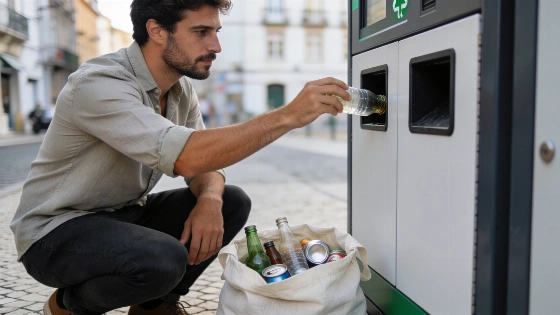
Portugal introduced Volta on 10 April. Every bottle or can below three litres carries a 10-cent deposit. Consumers get that money back when they take the empty container to an authorised return machine. In just five months, the system collected more than 300 million containers. Reports put the figure between 300 and 305 million and say the annual collection target had already been passed.
The system is simple. Discarded packaging becomes a small cash payment. Jardim said that has led some people to search through rubbish bins and containers. He also said CASA had seen cases in which people with drug dependency problems relapsed after gaining access to immediate income.
A petition opposing Volta has collected more than 37,000 signatures and has entered the parliamentary process. The dispute is therefore no longer only about the system’s launch: it concerns whether the scheme should continue in its current form and how its social effects should be addressed.
Lisbon mayor Carlos Moedas has called the development an unprecedented social drama. Speaking to CNN Portugal, he said the system was pushing people to rummage through waste for containers they could exchange for money. CASA's account brings the view of a direct service provider into the debate. It also takes the issue beyond recycling rates. In September, Moedas publicly called for the system to be canceled immediately. He linked it to social problems and worsening urban cleanliness.
Portugal's environment minister, Maria da Graça Carvalho, has defended Volta and said the system is here to stay. Her position is that Portugal is the 19th EU country to introduce a comparable deposit-return system. European obligations point toward a 90% separate-collection rate by 2029. The ministry has also said that canceling Volta would not automatically mean returning PRR funds, because the scheme was not financed as a separate PRR project.
The dispute matters beyond Portugal. Spain is moving toward similar return-and-refund systems under European rules. The Portuguese experience offers a clear warning: a measure that recovers packaging can also create a new source of income for people searching through urban waste. Another social impact case shows why environmental policy cannot be judged only by its headline results. Volta is showing that recycling success and social protection need to be assessed together before similar systems expand. Euronews and Portuguese media report that the political divide is now clear. The Lisbon mayor wants Volta ended, while the environment ministry insists that it continue.