Spain’s government is moving forward with the redistribution of unaccompanied migrant minors. The PP, after months of resistance, now pledges to comply with the law. Ceuta’s shelters are overwhelmed, forcing urgent action.
The Spanish government is set to begin the redistribution of unaccompanied migrant minors from Ceuta, as the Partido Popular (PP) confirms it will comply with the law despite previous opposition. This marks a significant shift after years of political standoff, with PP-led regions now expected to accept their assigned share of minors following a surge in arrivals that has overwhelmed Ceuta’s limited resources.
Unlike previous crises in the Canary Islands, where regional governments struggled to secure support, the current situation in Ceuta has left little room for political maneuvering. Since April 2025, the criteria for distributing minors have been enshrined in law, obliging all autonomous communities to participate. Although the PP initially voted against the decree, including its own deputies from the Canary Islands, the measure passed with support from Junts. Now, the PP leadership, under Alberto Núñez Feijóo, has publicly committed to upholding the law, even as some coalition agreements with Vox had previously promised to reject such transfers.
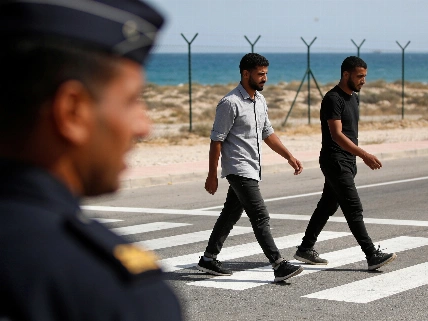
Ceuta’s reception system is under severe strain. Official figures from the city’s president, Juan Jesús Vivas, indicate around 1,200 minors are currently in the city, far exceeding the declared capacity of just 29. Hundreds more are believed to be living on the streets after a mass border crossing last week. To address the emergency, the government has handed over two school buildings to Ceuta, one already housing 110 girls, while the other is being prepared for use. Local authorities admit that the transfer process, which had been running smoothly, now faces significant delays due to the scale of the crisis.
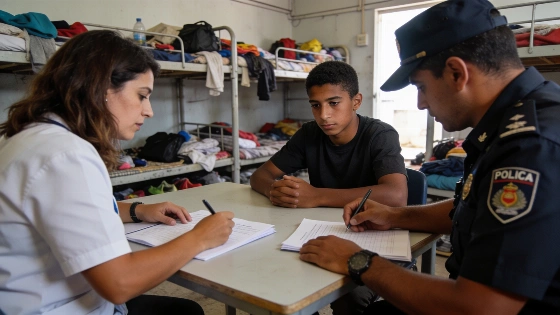
Minister of Youth and Children, Sira Rego, is in Ceuta to assess the situation and coordinate temporary solutions. The first step is registering each minor; police have already processed over 500. The next phase depends on other regions offering places for the children. The Ministry of Youth is also seeking agreements with NGOs and private organizations to help provide care. In Melilla, a smaller but notable increase in arrivals has also pushed local capacity to its limits, with 140 minors among 260 recent arrivals and only 30 available places. The city’s president, Juan José Imbroda, has called on fellow PP leaders to show solidarity and respect the legal framework.
Despite initial ambiguity from the PP leadership, the party’s stance is now clear: the law will be followed, even if some regional partners remain uneasy. Vox continues to oppose the transfers, advocating for the return of minors to their countries of origin, though this is seen as highly unlikely. Meanwhile, Junts has threatened to block any further transfers to Catalonia, but the government downplays the risk, noting that Catalonia already hosts more minors than the national average. The government points to the more than 1,750 minors already relocated from Ceuta, Melilla, and the Canary Islands to other regions, as detailed in recent coverage of Spain’s relocation efforts.
In the coming weeks, the focus will be on accelerating the registration and transfer process, with the government aiming to ease the pressure on Ceuta and Melilla as quickly as possible. The PP has demanded urgent appearances from several ministers in parliament, but the executive has not yet agreed to these requests. The situation remains tense, but the legal obligation now leaves little room for further political resistance.
Spain’s approach to unaccompanied migrant minors is shaped by both national and EU regulations. The 2025 decree established a binding framework for regional cooperation, aiming to prevent humanitarian emergencies in border territories. The issue remains politically sensitive, especially in regions governed by coalitions with Vox, but the current crisis in Ceuta has forced a rare consensus. The government’s ability to coordinate rapid transfers and secure regional participation will be critical in the weeks ahead. The outcome will likely influence future migration policy and inter-regional relations across Spain.