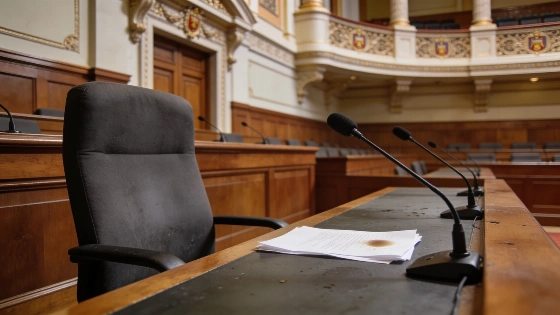
Key ministers again failed to appear in the Senate to address the Ceuta crisis. The PP accuses Sánchez of orchestrating the absences. The party now turns to the Supreme Court for clarification.
The political standoff over the Ceuta migration crisis escalated in Madrid as several government ministers, including Fernando Grande-Marlaska, again failed to appear before the Senate to explain recent events. The Partido Popular (PP), holding an absolute majority in the chamber, had called for extraordinary sessions to question the ministers about the situation in Ceuta. However, neither the Interior Minister nor his colleagues from Foreign Affairs and Defence attended, continuing a pattern of absence that has frustrated opposition parties.
During the latest session, the chair of the Senate's Interior Committee, Fernando Martínez-Maíllo, openly criticized the government, describing the coordinated no-shows as a deliberate strategy led by President Pedro Sánchez, who is currently on holiday. Martínez-Maíllo argued that the refusal to attend was not an isolated decision by individual ministers but a collective stance from the entire government. He labeled the repeated absences as 'insubordination' and 'intolerable defiance' within a democratic system.
The PP insists that both chambers of parliament—the Congress and the Senate—have equal constitutional rights to summon government officials. The party is now preparing to take the matter to the Supreme Court, seeking a legal ruling on whether ministers can choose which chamber to address. According to Martínez-Maíllo, this move is unprecedented, but he stressed that the government's conduct is even more extraordinary.
In the Senate session, PP spokesperson Luis Santamaría highlighted the seriousness of the Ceuta crisis and criticized the Interior Ministry for insufficient resources. He demanded that the government and Grande-Marlaska face parliamentary scrutiny instead of, as he put it, 'practicing ostrich politics.' Meanwhile, Vox's representative, Ángel Gordillo, linked the ministers' absence to Sánchez's earlier statements about governing without parliamentary oversight. Gordillo described the situation in Ceuta as an 'invasion' and called for PP and Vox to join forces in Congress to initiate a trial for treason against the Prime Minister.
The ongoing dispute underscores the deepening rift between the government and opposition over accountability during the Ceuta crisis. The PP's decision to involve the Supreme Court could set a new precedent for parliamentary oversight in Spain. Ceuta, a Spanish enclave on the North African coast, has faced repeated migration surges in recent years, often straining local resources and prompting national debate. The current crisis began in late July, leading to heightened political tensions and renewed scrutiny of the government's response. Parliamentary oversight of executive actions remains a cornerstone of Spain's democratic system, and the outcome of this legal challenge may influence future relations between the government and both chambers of parliament.