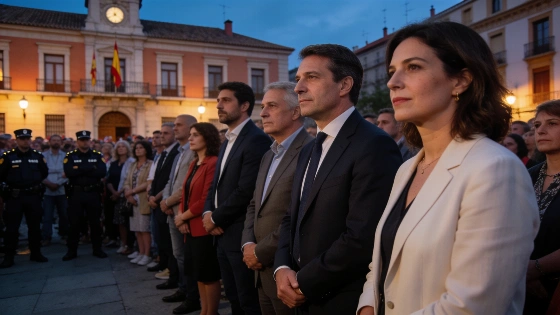
PP leaders will join nationwide rallies for Ceuta amid a migration crisis. The move comes just before Sánchez faces questions in Congress. Political divisions deepen within the FEMP.
Spain’s political landscape is bracing for a new confrontation as Alberto Núñez Feijóo and the Partido Popular (PP) leadership prepare to lead demonstrations across the country in support of Ceuta. The rallies, set for September 2 outside town halls nationwide, come at a critical moment: just hours before Prime Minister Pedro Sánchez is due in Congress to address the ongoing migration and humanitarian crisis in the enclave.
The PP’s decision to mobilize its entire national leadership, with Feijóo himself attending the Madrid protest, signals a direct challenge to the government’s handling of the situation. The crisis has seen 80,000 arrivals from Morocco since late July, with around 9,000 migrants still in Ceuta. Local authorities, residents, and opposition parties have sharply criticized the government’s response, and even some coalition partners have voiced concern.
Vox has also announced its participation, urging supporters to join under the slogan “No a la invasión. Defiende Ceuta. Defienda España.” While the PP frames the rallies as a defense of Spain’s borders and solidarity with Ceuta, the events are widely seen as a protest against the government’s management of the crisis. The timing—just 12 hours before Sánchez and Feijóo face off in Congress—adds to the political stakes.
The initiative for the September 2 rallies came from María José García-Pelayo, PP mayor and president of the Federación Española de Municipios y Provincias (FEMP). However, the move has sparked internal conflict. PSOE, IU, ERC, and Junts have publicly condemned García-Pelayo for acting unilaterally, accusing her of bypassing FEMP’s governing bodies and using the institution for partisan purposes. In a joint statement, these groups demanded a reversal of her decisions and called for respect for institutional procedures.
Many rally announcements feature the FEMP logo, but there is no consensus within the organization. The dispute has exposed deep divisions, with opposition groups insisting that solidarity with Ceuta should not be politicized. They argue that local governments have consistently shown support in times of crisis, but warn against using the FEMP for party interests.
The protests are set against a backdrop of mounting pressure on the government. As Sánchez prepares to explain his crisis management in Congress, the opposition is intensifying its campaign. The situation in Ceuta has already prompted calls for early elections and heightened scrutiny of the government’s actions, as detailed in recent coverage of the political fallout from the Ceuta crisis.
Ceuta’s strategic position on the North African coast has long made it a focal point for migration flows into Spain. The current crisis has strained local resources and fueled national debate over border security, humanitarian obligations, and the role of municipal institutions. The outcome of the upcoming rallies and the subsequent parliamentary debate could shape Spain’s approach to migration and inter-party relations in the months ahead.