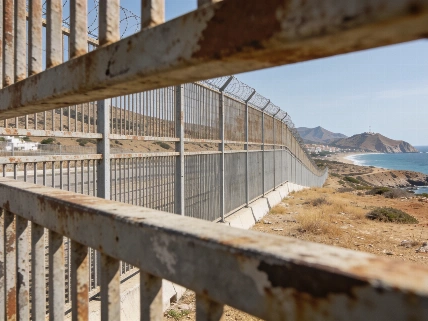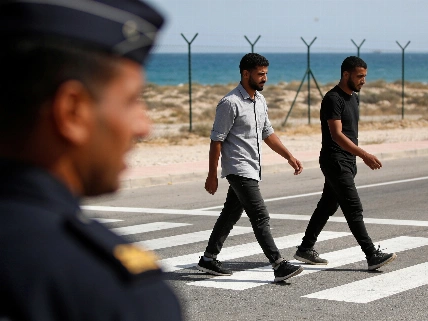
The Partido Popular has sharply criticized the government after Morocco signaled it may halt the extradition agreement. The dispute centers on Ceuta and Melilla, with the PP demanding stronger action from Madrid.
The Partido Popular (PP) has escalated its criticism of the Spanish government following Morocco's announcement that it is considering suspending the bilateral extradition agreement. The move comes after Morocco's justice minister, Abdellatif Uahbi, reiterated Rabat's longstanding claim over Ceuta and Melilla, sparking renewed political tension between the two countries. PP leader Alberto Núñez Feijóo responded by insisting that the sovereignty of the two autonomous cities is non-negotiable and must be defended, not discussed.
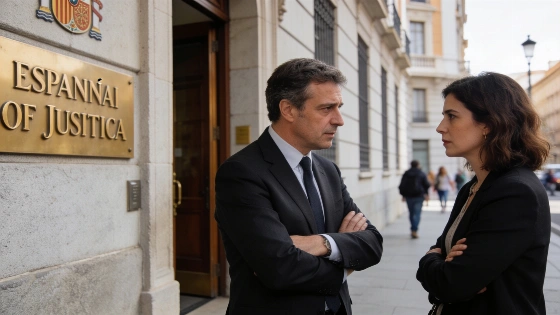
In the wake of these developments, the PP has submitted a series of written parliamentary questions to Justice Minister Félix Bolaños, seeking clarity on the government's diplomatic response and the legal tools available for returning Moroccan nationals who entered Ceuta during the recent mass crossing. The party has also criticized the government for not summoning Morocco's ambassador in Madrid, Karima Benyaich, contrasting this with the swift diplomatic action taken against Italy when Rome imposed border controls on Spanish arrivals. This comparison highlights the PP's view that the government has shown insufficient resolve in defending Spanish interests.
PP officials have intensified their rhetoric, with Jaime De los Santos, the party's deputy secretary for Education and Equality, publicly questioning why the government has not taken firmer action after what he described as an 'invasion' and a direct challenge to the Spanish identity of Ceuta and Melilla. De los Santos also demanded detailed explanations from Minister Bolaños regarding coordination with Moroccan authorities and the specific legal mechanisms being used to process returns, especially for minors.
The party's shift in tone marks a departure from its initial approach at the start of the Ceuta crisis, when PP leaders avoided directly blaming Morocco and instead focused criticism on Prime Minister Pedro Sánchez's migration policies. However, as the situation has evolved and Moroccan officials have reiterated their claims, the PP has increasingly targeted both Rabat and the Spanish government. Alma Ezcurra, the party's deputy secretary for Sectoral Coordination, suggested that the mass arrival of over 70,000 people was not accidental, implying Moroccan involvement, and reaffirmed that the sovereignty of Ceuta and Melilla is not up for negotiation.
Alongside calls for immediate returns of Moroccan nationals, particularly minors, the PP has accused the government of inaction and failing to ensure the security of Ceuta. De los Santos cited figures of 11,000 individuals still present in the city, exceeding government estimates, and pressed for urgent measures. The party has also criticized the lack of government accountability in the Senate and demanded written responses to its questions in Congress.
The status of unaccompanied minors remains a central issue, with official estimates indicating around 4,000 still in Ceuta. While both the government and the PP agree on the priority of returning these children to their families in Morocco, the process requires individualized procedures under the 2007 bilateral agreement on child protection and repatriation. The ongoing dispute has kept the situation in Ceuta tense, with the PP maintaining pressure on the government to act decisively.
This diplomatic standoff comes amid broader European concerns over border security, as highlighted when Italy extended border checks for travelers from Spain following the Ceuta migration surge. For more on how these measures have affected Spanish-Italian relations, see the report on recent cross-border policy changes.
Ceuta and Melilla have long been points of contention between Spain and Morocco, with both cities serving as key entry points for migrants seeking access to Europe. The bilateral extradition agreement, now under threat, has been a cornerstone of judicial cooperation since its inception. Any suspension could complicate not only migration management but also broader security and legal collaboration between the two countries. The current standoff underscores the fragility of Spain's relationship with Morocco and the political stakes for the Sánchez government as it faces mounting pressure from the opposition.