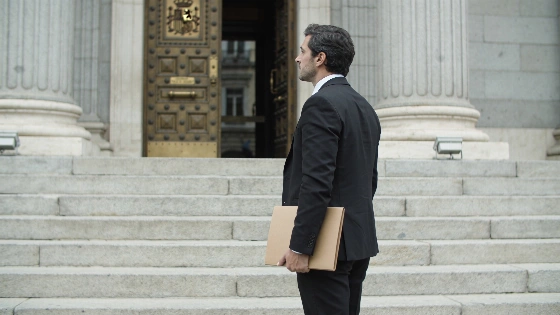
Spain’s Public Prosecutor’s Office wants the Supreme Court to lift the suspension before the 29 November election, when about 400,000 overseas registrations could be affected.
The overseas electoral register was closed on 1 August, leaving the Supreme Court with little room to resolve a dispute before Spain’s 29 November general election. The Public Prosecutor’s Office is asking the court to lift its temporary voting ban and allow affected citizens to join the proceedings.
The request covers people who obtained Spanish nationality under the so-called 'ley de nietos' and are registered abroad. Spanish media estimate that about 400,000 people whose nationality came through the procedure could be affected. Their ability to vote is now directly at issue.
The immediate obstacle is the electoral roll. For legal certainty and compliance with electoral law, the register can be changed only within narrow limits after its 1 August closure. The prosecutor warns that applying the Supreme Court’s order could keep registrations suspended between now and election day, and even afterwards. RTVE reported that any reversal would have to reach the overseas register, the Censo Electoral de Residentes Ausentes, before ballots are issued and processed.
The Democratic Memory Law covers, among other categories, children and grandchildren of Spaniards born outside Spain, as well as descendants of people who lost or renounced Spanish nationality as a result of persecution and exile.
That timetable now weighs heavily on the judges’ assessment of whether precautionary measures remain justified. The dispute concerns whether a later administrative instruction lawfully broadened the statutory route to Spanish nationality.
The Supreme Court gave the parties 48 hours to submit arguments after examining requests from the claimant and an issue raised by the court itself. The deadline ended on Thursday, 8 October.
The Public Prosecutor’s Office told the Administrative Litigation Chamber that the early election call creates serious practical difficulties and possible incompatibilities with the measures under appeal. Fiscalía was asked to address whether the suspension should remain in force. The State Legal Service received the same request. The Central Electoral Commission, Vox and Iustitia Europa were also asked to respond.
The parties must address whether directly affected naturalised citizens should be admitted to the case. The prosecutor repeated that those citizens should be allowed to appear and defend their interests.
The demand is procedural, yet its effect is immediate. People whose electoral registration is suspended cannot vote unless a consulate expressly and individually confirms that they are the child or grandchild of an exile persecuted for political or ideological reasons, or because of belief or sexual orientation and gender identity.
The electoral service must follow the Central Electoral Commission’s instructions for people affected by the Supreme Court order of 10 September. The final procedure will therefore depend not only on the judges’ decision but also on how electoral authorities operationalise it after the roll’s 1 August closure.
The nationality itself is not cancelled. Applications still being processed are not stopped. The controversy concerns the right to vote and the status of entries in the overseas electoral register, rather than the validity of Spanish nationality already granted.
The dispute began with precautionary measures granted in part by the Fourth Section of the Supreme Court’s Administrative Litigation Chamber on 8 and 9 September 2026. The order suspended the electoral effects of registrations in the Censo Electoral de Residentes Ausentes involving people who received nationality through the eighth additional provision of Law 20/2022 on Democratic Memory.
The order focused on cases based on the presumption of exile introduced by an October 2022 instruction from the Ministry of Justice. The suspension does not apply in the same way where descent from exiles is supported by consular records.
Vox and Iustitia Europa had sought those measures. The court pointed to an extraordinary increase in the CERA of more than 400,000 voters compared with the 2023 general election. In its view, that increase created a real and serious risk to the objectivity and transparency of the electoral process. The organisations’ applications became the basis for wider litigation over the legality of the administrative procedure.
The government’s legal service has reached the same practical position as the prosecutor, even though the arguments come from different sides. In its submission, the Abogacía del Estado also requested that the suspension be lifted because reviewing all the files before 29 November would be materially impossible.
The case belongs to a wider sequence of Supreme Court disputes involving electoral rules and the powers of public institutions. It follows an earlier court challenge involving Constitutional Court judges.
The court can keep the suspension or remove it. It can also adapt the measure to the election calendar. The prosecutor’s position is that a measure designed to protect electoral integrity cannot be applied mechanically when the closed register makes individual review impossible.
Until the ruling arrives, about 400,000 overseas registrations may remain exposed to a decision made against a rapidly approaching election date.