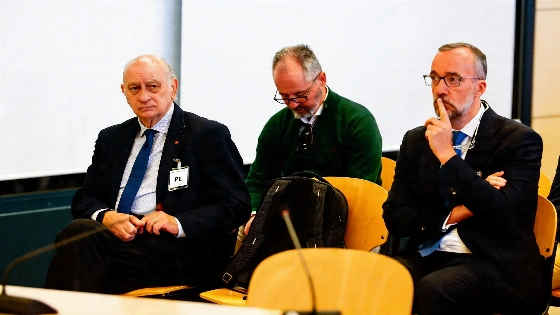
Spain’s anti-corruption prosecutors refuse to reduce their 15-year sentence request for ex-minister Jorge Fernández Díaz and other top officials in the ‘caso Kitchen’ trial. The court has dropped charges against two police officers.
Spain’s anti-corruption prosecutors have reaffirmed their demand for 15-year prison sentences for former Interior Minister Jorge Fernández Díaz and several senior officials, as the high-profile ‘caso Kitchen’ trial enters its final phase at the Audiencia Nacional. The prosecution alleges that Fernández Díaz, along with Francisco Martínez (former Secretary of State for Security) and Eugenio Pino (former Deputy Operational Director of the National Police), orchestrated an illegal operation in 2013 to spy on Luis Bárcenas, the former treasurer of the Partido Popular, with the aim of seizing sensitive documents that could implicate senior party figures during the height of the Gürtel scandal.
During Monday’s session, the court announced the withdrawal of charges against two police commanders, José Ángel Fuentes Gago and Bonifacio Díez Sevillano, who had been on trial since proceedings began. The public prosecutor’s office did not pursue charges against these two, and the tribunal’s decision marks a significant development as the trial nears its conclusion. Meanwhile, the prosecution’s position remains unchanged for the main defendants: 15 years of imprisonment are sought for Fernández Díaz, Martínez, Pino, and commissioner Andrés Gómez Gordo. For commissioner José Manuel Villarejo, accused of recruiting Bárcenas’s driver as an informant, the prosecution is seeking 19 years. Sergio Ríos, the former driver, faces nearly 12 and a half years, while commissioner Marcelino Martín Blas could receive two years and six months.
The oral hearings, which have been ongoing since April, are now focused on the final statements from both the prosecution and the defense. On Monday, the last three defendants—commissioner José Luis Olivera and inspectors José Ángel Fuentes Gago and Bonifacio Díez Sevillano—gave their testimony. With the interrogations concluded, the next stage will see all parties present their closing arguments, after which the accused will have the opportunity to make final remarks before the court deliberates.
This case has drawn comparisons to other major corruption scandals in Spain, such as the recent suspension of Víctor de Aldama’s sentence in the ‘caso Koldo’, which also sparked debate over prosecutorial decisions and the handling of high-profile defendants. For further context on how Spanish courts have managed similar cases, see the report on the Supreme Court’s actions in the ‘caso Koldo’ here.
The ‘caso Kitchen’ investigation has highlighted the intersection of politics and law enforcement in Spain, with the alleged misuse of police resources for political ends. The outcome of this trial is expected to have lasting implications for accountability within Spain’s security institutions. The Audiencia Nacional’s verdict will be closely watched, as it may set a precedent for future cases involving political corruption and the abuse of state power.