The conviction of David Sánchez has intensified tensions within the PSOE. Party leaders warn that judicial actions against the prime minister's family could backfire politically. The case has triggered strong reactions among both officials and grassroots members.
The recent conviction of David Sánchez, brother of Prime Minister Pedro Sánchez, has triggered a wave of internal mobilization within the PSOE. The court in Badajoz sentenced David Sánchez to nine years of disqualification for prevarication, a decision that has not only affected the president personally but also stirred significant political debate. Senior party figures argue that the ongoing judicial cases targeting the prime minister’s family are fueling anger among the party base and could ultimately have the opposite effect intended by their political opponents.
According to influential voices within La Moncloa, the legal proceedings against Pedro Sánchez’s relatives are increasingly seen as personal attacks rather than genuine corruption scandals. This perception, they suggest, is strengthening the resolve of PSOE supporters, especially as the party faces a series of court cases involving various socialist leaders. The recent ruling has further inflamed the party’s grassroots, particularly after the judge Juan Carlos Peinado imposed travel restrictions on Begoña Gómez, the prime minister’s wife, citing flight risk concerns. Gómez responded by submitting travel documents for her planned trip to London for her daughter’s graduation.
Party officials note a growing distinction among progressive voters between the cases involving the president’s family and those linked to figures like José Luis Ábalos and Santos Cerdán. While Ábalos faced a 24-year sentence for corruption, the cases against Sánchez’s family are viewed as politically motivated. One senior PSOE strategist commented that each new judicial action against the president’s relatives only increases indignation and activism among the party’s supporters, a trend not seen in previous months.
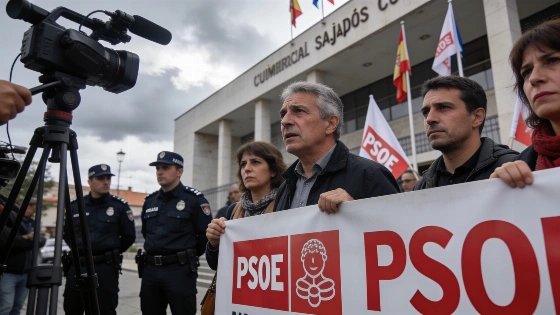
The verdict from the Audiencia Provincial de Badajoz has prompted varied but coordinated responses from PSOE leadership. Transport Minister Óscar Puente was among the first to react, criticizing the ruling as an attempt to undermine the government through the courts rather than at the ballot box. In Extremadura, regional secretary Álvaro Sánchez Cotrina addressed the media shortly after the verdict, expressing respect for judicial decisions while maintaining confidence in the innocence of those convicted. His approach was publicly praised by both critics and allies within the party, with several regional leaders echoing his balanced tone and support for due process.
Despite the strong reactions, PSOE leaders have avoided using the term “lawfare” to describe the situation. However, the belief that the judiciary is being used for political purposes has become widespread within the party. Equality Minister Ana Redondo referenced a recent 40dB. poll for EL PAÍS and Cadena Ser, which found that over 65% of Spaniards believe the justice system is being politically instrumentalized. Redondo emphasized that little concrete evidence was found against David Sánchez and suggested that such decisions reinforce perceptions of judicial partiality. Finance Minister Arcadi España also highlighted the lack of proof in the case, noting that the prosecution had called for acquittal and expressing confidence that higher courts would overturn the conviction.
The court ultimately dismissed the main charge of influence peddling, which had been the focus of the investigation, and found no evidence of pressure to create or assign the disputed position in the Badajoz provincial government. The case dates back to a period when David Sánchez was politically isolated after losing his role as party secretary general. The PSOE’s internal response has been to maintain respect for the judiciary while insisting on the innocence of those involved and preparing for further legal appeals.
For context, Spain has seen a series of high-profile judicial cases involving political figures in recent years, often leading to intense public debate about the independence of the judiciary and the boundaries between legal and political accountability. The current situation underscores ongoing tensions between the country’s main parties and the courts, with potential implications for public trust in both institutions. As the legal process continues, the PSOE’s strategy appears focused on channeling internal frustration into political momentum, while carefully navigating the sensitive relationship between politics and the justice system.