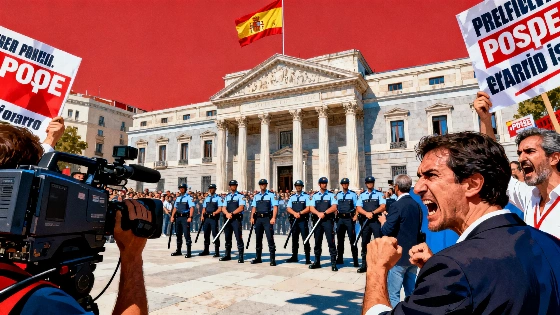
A Madrid judge has imposed strict measures on Begoña Gómez, wife of Spain's Prime Minister. The decision has triggered a wave of anger within the PSOE, with party leaders denouncing the move as politically motivated.
The decision by Judge Juan Carlos Peinado to confiscate the passport of Begoña Gómez, wife of Prime Minister Pedro Sánchez, and ban her from leaving Spain has ignited a fierce backlash within the PSOE. The court order, which also requires Gómez to report to the court every two weeks, has been widely condemned by party officials, who describe the measures as excessive and lacking legal justification.
Senior PSOE figures argue that the judge's actions amount to a political attack, pointing to what they see as a pattern of judicial scrutiny targeting the families of prominent party members. The reaction has been immediate and intense, with both grassroots members and high-ranking officials expressing frustration and anger. According to party sources, the move has unified the PSOE at a time when it was already under pressure from a series of legal cases involving current and former leaders.
Rebeca Torró, the party's Organization Secretary, criticized the court's decision as disproportionate and politically charged. High-level sources in La Moncloa echoed these concerns, claiming the judge's actions demonstrate a clear bias and lack of legal foundation. The Interior Minister, Fernando Grande-Marlaska, has formally complained to the judiciary's governing body after Judge Peinado suggested that Gómez's police escorts might assist her in fleeing the country. Regional leaders, including the President of Asturias, Adrián Barbón, have also condemned the judge's remarks as inappropriate and damaging to the reputation of law enforcement professionals.
The controversy comes at a time when the PSOE is already dealing with multiple legal challenges involving figures such as José Luis Rodríguez Zapatero, José Luis Ábalos, and Santos Cerdán. The latest developments have prevented the government from focusing on positive economic data and policy achievements. Some party leaders believe that the perceived judicial overreach could ultimately mobilize the PSOE's base, arguing that the sense of persecution is bringing members and voters together.
Several ministers have publicly questioned the judge's impartiality, with Diana Morant highlighting Peinado's family connections to the Partido Popular and suggesting possible conflicts of interest. The government has also pointed to the contrast with other recent cases, such as the refusal to impose similar restrictions on Zapatero. Meanwhile, the opposition Partido Popular has used the situation to renew calls for early elections, while Vox, acting as a popular prosecutor in the case, has welcomed the court's decision.
In the broader context, the case against Begoña Gómez is seen as part of a wider trend of judicial involvement in Spanish politics. The General Council of the Judiciary has faced criticism for its handling of politically sensitive cases, and the debate over the independence of the judiciary remains a contentious issue. According to public records, Spain's legal system allows judges significant discretion in imposing precautionary measures, but such decisions are often subject to appeal and political scrutiny. The outcome of this case could have lasting implications for the relationship between the judiciary and the executive in Spain.