Only 20.5% of Spaniards are satisfied with how democracy works, says CIS. Most demand stronger anti-corruption action and judicial reforms. Confidence in political parties remains at record lows.
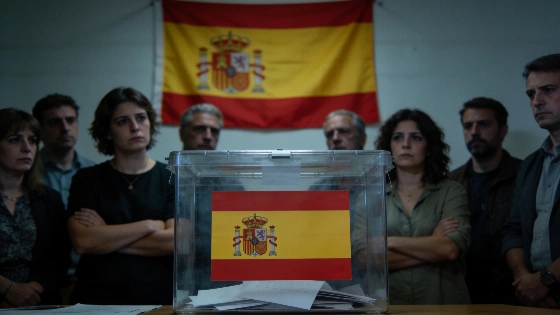
Confidence in Spain’s democratic system has reached a new low, with just 20.5% of citizens expressing high or moderate satisfaction with how democracy functions, according to the latest survey from the Centro de Investigaciones Sociológicas (CIS). The data, released on Monday, highlights that over half of respondents—56.9%—are either “not very” or “not at all” satisfied with the current state of the system. These figures remain largely unchanged from the previous CIS survey in April 2025, though there is a slight uptick in positive sentiment for 2026.
Despite widespread dissatisfaction, the preference for democracy remains strong: 80.8% of those surveyed believe democracy is preferable to any other form of government. However, 8.8% say that, under certain circumstances, an authoritarian regime could be better, and 8.3% are indifferent to the type of government. Age plays a role in these attitudes—while those over 35 overwhelmingly favor democracy, a notable share of younger adults (14.8% of 18–24-year-olds and 19.3% of 25–34-year-olds) would consider an authoritarian system depending on the situation.
Political leanings also influence these views. Among voters for Vox, 29.4% see an authoritarian government as sometimes preferable, compared to 10.8% of Partido Popular (PP) voters and 10.2% of Junts supporters. The CIS, led by José Félix Tezanos, also asked what changes citizens believe are needed to improve democracy. The top demand, cited by 12.5%, is for “effective measures against corruption.” A striking 87.5% feel current anti-corruption mechanisms are insufficient.
The second most requested reform is the “renewal and depoliticization of the judiciary and effective separation of powers,” mentioned by 10.4% of respondents. Concerns about the impartiality of the justice system are widespread: 76.9% believe the judiciary is not neutral in cases involving political parties, and 88.8% think politicians are treated differently from ordinary citizens. When asked about the influence of wealth on judicial outcomes, 78.4% say there is unequal treatment for the rich and poor, while only 21% believe money does not affect justice.
Among public institutions, the Armed Forces stand out as the most trusted, scoring 6.96 out of 10—the only institution to surpass the halfway mark. Regional governments come next, though they fall short of a passing grade. Courts, the media, the Constitutional Court, and the national parliament follow in the trust rankings. Political parties remain at the bottom: just 0.7% of citizens have “total confidence” in them, while 28.3% express “no confidence at all.” Nevertheless, three out of four Spaniards agree that democracy cannot exist without political parties, and nine out of ten see the need for more or better ways for citizens to participate in political decisions.
Media credibility is also under scrutiny. According to the CIS, 81.5% of respondents believe the media often spread falsehoods and rumors. More than half (52%) feel that diverse opinions are not adequately represented, and 87.9% think the media favor certain political or economic interests. These findings echo broader concerns about institutional trust and transparency, which have also surfaced in recent judicial and political controversies. For example, ongoing debates about accountability and standards for public officials have been highlighted in recent months, as seen in the coverage of high-profile investigations involving the Guardia Civil and SEPI—issues explored in detail in this recent report on political pressure and judicial cases in Spain.
Spain’s persistent concerns over corruption and the impartiality of its institutions reflect a wider European trend, where public trust in democratic systems is being tested by political polarization and high-profile scandals. The CIS survey underscores the urgency for reforms that address corruption and strengthen the separation of powers. As Spain continues to navigate these challenges, the demand for greater transparency and citizen participation is likely to remain at the forefront of the national conversation.