Publix reported a slowdown in its core business as the supermarket chain’s second-quarter results reflected persistent food-cost pressure and tighter consumer budgets. For the quarter ended June 27, the company posted sales of $15.7 billion, up 1% from $15.6 billion a year earlier. Comparable-store sales, a measure of performance at established locations, fell 0.5%. New-store growth helped lift total revenue even as sales at existing stores weakened.
Over the first half of 2026, total sales reached $31.9 billion, up 1.5% from $31.4 billion a year earlier, while comparable-store sales slipped 0.3%. Publix CEO Kevin Murphy cited “challenging economic conditions” and changes to Medicare’s maximum fair prices for 10 prescription drugs as factors affecting sales. The negotiated prices took effect on January 1, 2026, under the federal drug-price negotiation structure established by the Inflation Reduction Act. Publix said the Medicare price changes reduced pharmacy sales.
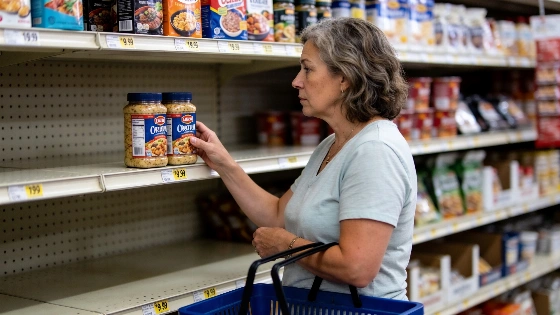
The company also reported that customers were responding to higher food costs and constrained budgets by buying fewer items and shifting toward lower-priced brands and alternatives. Grocery prices in the United States remained about 22% above their level five years earlier by September, while the U.S. Department of Agriculture’s Economic Research Service forecast food-at-home inflation of roughly 2.4% for 2026, following a 2.3% rise in 2025. A slower rate of inflation means prices are increasing more gradually, not that they have returned to earlier levels. Value-focused shoppers are also comparing traditional supermarkets with discount retailers such as Aldi and Walmart.
Despite the pressure on sales, Publix’s reported quarterly net earnings rose 20.5% to $1.7 billion, from $1.4 billion a year earlier, and earnings per share increased to $0.52 from $0.42. Those headline figures were substantially affected by unrealized gains on equity securities. Excluding those gains, adjusted quarterly net earnings were $1.06 billion, or $0.33 per share, compared with $1.04 billion, or $0.32 per share, a year earlier. That was a much smaller increase than the reported profit growth. For the six-month period, net earnings totaled $2.45 billion, up 2.7%, while adjusted earnings were $2.20 billion, or $0.69 per share, nearly unchanged from the previous year.
As of August 1, Publix lowered its internal associate-share price to $19.60 from $20.45. The company is privately held, and its shares are not traded on public exchanges; they are generally available to eligible employees and board members. The internal price change is distinct from a public-market share-price decline. Murphy acknowledged the difficult economic environment and thanked employees for their commitment. The financial results are based on unaudited statements, which will be submitted to the U.S. Securities and Exchange Commission and published on the company’s website.
Publix’s results show how total revenue can grow while same-store performance weakens: sales for the first six months rose 1.5%, but comparable-store sales declined 0.3%. Expansion shaped the company’s first-half performance as price-conscious shopping and pharmacy revenue pressure weighed on sales, while adjusted earnings remained nearly flat over the six-month period.