Rafael Nadal is shifting his focus from tennis to business, driving the global expansion of Rafa Nadal Academy and the ZEL hotel chain. Strategic partnerships and family involvement are shaping his new legacy beyond sports.
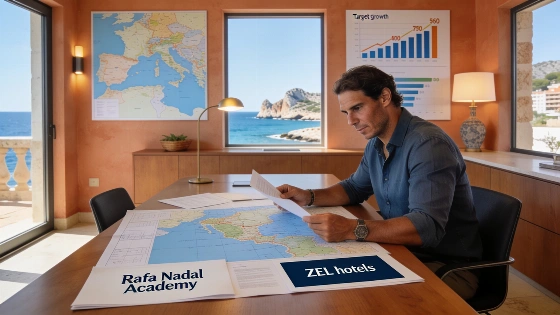
Rafael Nadal is accelerating the international growth of his business ventures, marking a significant shift from his career on the tennis court. According to CNBC, the former world champion is now dedicating most of his time to expanding the Rafa Nadal Academy and the ZEL hotel chain, both rooted in Mallorca but now targeting a global audience. The move comes as Nadal seeks to establish a lasting legacy outside professional sports, with a clear emphasis on education, hospitality, and tourism.
The Rafa Nadal Academy remains at the center of this new phase. Rapid growth in recent years prompted Nadal to bring in GPF Capital as a strategic partner, aiming to scale the academy’s model internationally. Despite this partnership, Nadal retains operational control, underscoring the personal significance of the project. He describes his daily role as increasingly focused on management and strategic planning, rather than direct coaching, though he still steps in when his expertise is needed on the court.
International expansion is already underway, with Nadal actively involved in daily operations and decision-making. He highlights the importance of trusted partners, noting that GPF Capital’s Spanish roots and professionalism have been key to advancing the academy’s objectives. The collaboration is designed to accelerate global reach while maintaining the academy’s core values and identity.
Alongside the academy, Nadal is investing heavily in the hospitality sector through ZEL, a hotel chain developed in partnership with Meliá. Drawing on his extensive experience as a traveler during his tennis career, Nadal has shaped ZEL’s concept around Mediterranean lifestyle and culture. The idea originated from informal brainstorming sessions with Meliá’s Gabriel Escarrer, eventually evolving into a brand that aims to export the Mallorca experience worldwide. The chain has already opened four hotels in just two years, with plans to reach seven by year-end.
Nadal attributes the success of ZEL to a combination of personal experience, local roots, and a shift in consumer preferences toward travel and unique experiences. He emphasizes that Mallorca’s tourism-driven economy and his own upbringing have influenced his business direction. The partnership with Meliá, a company he trusts and respects, has provided both expertise and stability as ZEL expands internationally.
Family remains a central element in Nadal’s business structure. He works closely with relatives through Aspemir, valuing the daily contact and shared decision-making that come from operating as a family business. Nadal credits his father’s work ethic and entrepreneurial achievements as a major influence, particularly his father’s success in building the largest glass company in the Balearic Islands from scratch.
Beyond hospitality and sports, Nadal’s investments extend to education and health, including a foundation supporting children at risk of social exclusion. He believes that combining sport and education can create opportunities for disadvantaged youth, and reports strong results from the foundation’s first decade of work. All investment decisions are made with a trusted team, ensuring alignment with his long-term vision.
Nadal’s approach reflects a broader trend among high-profile athletes who leverage their reputation and resources to build business empires after retirement. In Spain, the intersection of sports, tourism, and education is particularly significant, given the country’s reliance on these sectors for economic growth. The expansion of the Rafa Nadal Academy and ZEL not only reinforces Mallorca’s position as a hub for international visitors but also highlights the potential for Spanish brands to compete globally in hospitality and sports education.
As Nadal continues to balance business ambitions with family priorities, his ventures are likely to influence both the local economy and Spain’s international image. The integration of family management, strategic partnerships, and a focus on legacy sets a model for other Spanish entrepreneurs seeking to expand beyond national borders. With tourism and education remaining central to Spain’s future, Nadal’s evolving business strategy may offer valuable lessons for the next generation of business leaders.