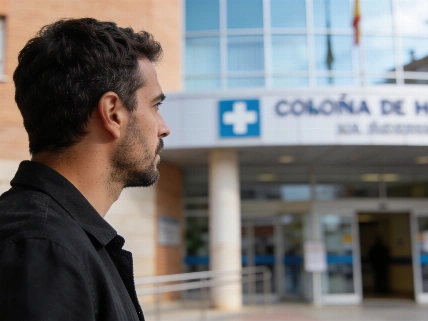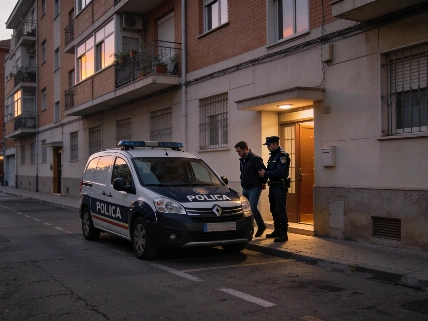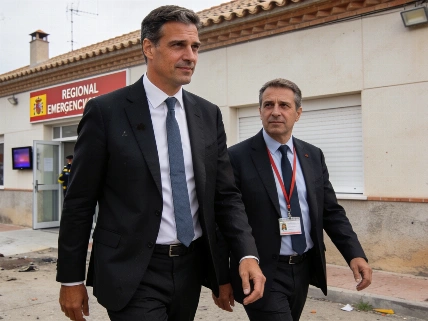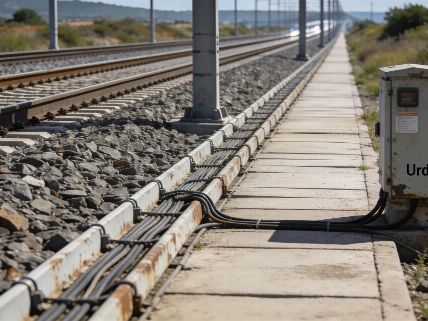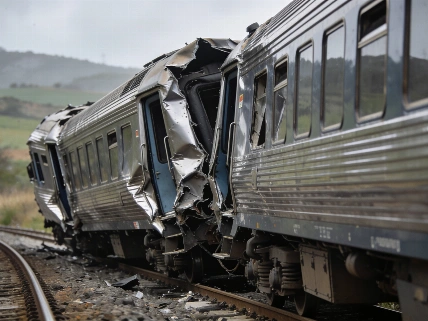
At least 69 people died and more than 200 were injured in Wednesday’s rail disaster near Urda, Toledo. On 28 October 2026, a Renfe AVE train collided with the stationary rear of an Iryo train on the Madrid-Seville high-speed line, at about kilometre 118. The collision followed a technical failure affecting the LZB train-protection system. Preliminary investigations indicate that the fault came before at least three errors by an Adif operator at Atocha.
The LZB system continuously monitors train movements and can automatically trigger braking in hazardous circumstances. Its outage, which affected a stretch of roughly 63 kilometres and stopped at least six trains, forced traffic management into degraded operating procedures. Reports place the initial signalling incident at around 08:30; at 08:36, Adif’s control centre authorised the AVE to continue under BSL after instructing its driver to disconnect and reconnect LZB. The collision occurred at approximately 08:53. The investigation is examining both the signalling failure and the decisions at Adif’s Madrid Atocha control centre. The Guardia Civil is investigating those actions, and traffic on the Madrid-Andalusia route was suspended after the crash.
The crash has sharpened attention on a separate, longstanding weakness in rail oversight: since 2020, the Agencia Estatal de Seguridad Ferroviaria (AESF) has fallen short of its annual plans for full or partial audits of Adif and Adif Alta Velocidad.
In 2025, the agency recorded 19 audit actions completed or under way against 27 planned for Adif’s safety management systems, or 70.37% of its target. Its latest annual accounts, submitted to the Intervención General de la Administración del Estado (IGAE), show a different result for railway companies: AESF carried out 31 audits against 12 planned. There were 35 licensed railway companies that year.
The infrastructure audit shortfalls were largest in 2021, when AESF carried out only six planned audits and achieved less than 43% of its target. The agency reached 46% in 2020, 53.3% in 2022, 74.19% in 2023 and 75.76% in 2024. elDiario.es asked the Ministry of Transport and Sustainable Mobility about the record but received no response.
One 2025 audit action covered Adif’s plan for track deformations and rail breaks on lines managed by Adif and Adif Alta Velocidad. That review also appears in AESF’s 2026 action plan, alongside supervision of Adif’s traffic management and operating processes, with the scope still to be determined. The agency also reported 29 visits, cab ride-alongs and inspections with the infrastructure managers in 2025, 148% above plan; some inspections were carried out by Adif under its own annual safety plan.
Adif’s operating instruction COI 01/25, in force since February 2025, requires the block section ahead to be completely clear when traffic resumes under BSL after automatic-block signalling fails. The Guardia Civil is examining whether the AVE’s movement after the LZB outage complied with applicable degraded-mode procedures.
AESF has repeatedly cited workload and staffing constraints in its accounts. It reported considerable staff turnover and delays in filling vacancies, which it said had postponed the completion of some activities. The agency’s accounts say it tried to prevent delays from affecting its supervision plan, which it treats as a priority.
Separately, Spanish reporting said the SCF rejected Adif’s annual safety plan for 2026 in December 2025. The objections reportedly included the absence of measures to reduce workloads in control centres and reviews of procedures related to signalling failures identified in 2024 and 2025.
The agency ended 2025 with 129 employees: one senior official, 117 civil servants and 11 other employees. Its workforce had grown 31% since 2020, when it had fewer than 100 staff. Since 2019, AESF has opened nearly 7,000 sanctioning proceedings and issued about 6,000 new train-driver licences.
Founded in 2015, AESF oversees railway infrastructure, trains, operations and staff, and grants or withdraws railway company and train-driver licences. The scrutiny follows the Urda crash investigation, in which a judge ordered the seizure and custody of any black boxes recovered from the trains.