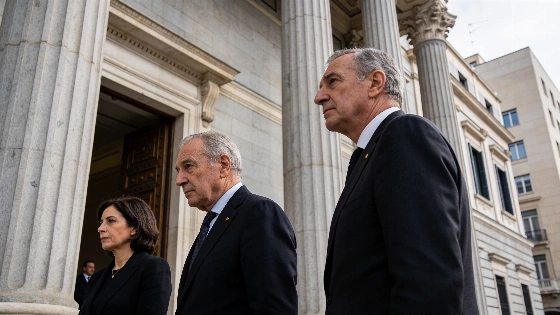
Ramón Espinar Gallego, the first president of the Madrid Assembly and a key PSOE figure, has died at 72. His career spanned local government, regional leadership, and a later scandal. The news was confirmed by his son.
Ramón Espinar Gallego, a prominent figure in Madrid’s PSOE, has died at 72 after a long degenerative illness. His son, Ramón Espinar Merino—who once led Podemos in Madrid—confirmed the news on social media. Condolences came from across the political spectrum, including Isabel Díaz Ayuso, president of the Community of Madrid. The Ayuntamiento de Leganés, where Espinar served as mayor, also acknowledged his death and expressed support for his family.
Espinar’s political life was marked by both early achievements and later controversy. Born in Úbeda (Jaén) in 1954, he became mayor of Leganés in 1979, following Spain’s first democratic municipal elections. In 1983, he was named the first president of the Assembly of Madrid, a role he held until 1987. He later joined Joaquín Leguina’s regional government, first as Culture Minister and then as Finance Minister, helping to shape policy during a formative period for the region. Reports from EPE and Democrata describe Espinar as a central figure in Madrid’s political changes during the early years of democracy.
The Ayuntamiento de Leganés issued an official condolence, highlighting Espinar Gallego as the city’s first democratically elected mayor and expressing support for his family.
His later years were overshadowed by the Caja Madrid "tarjetas opacas" scandal. After leaving frontline politics in 1995, Espinar joined the board of Caja Madrid. He was among 65 people convicted for misuse of opaque credit cards. The National Court sentenced him to a year in prison and fined him €3,600. This conviction became a lasting part of his public record, as noted in recent coverage by EPE.
Espinar’s family responded to his death with a brief, dignified message. His son, who left politics in 2019 after the split between Más Madrid and Podemos, thanked those who had supported his father during his illness. No further details about the illness have been made public, other than that it was long and severe.
Reactions from Madrid’s political establishment were quick but measured. Díaz Ayuso’s public message reflected the respect Espinar still held, despite the controversies of his later years. His time as Assembly president coincided with a period of rapid change in Madrid, and his later government roles influenced the region’s cultural and financial policies.
Espinar Gallego was not only the first president of the Assembly of Madrid but also played a key role in the regional government under Joaquín Leguina, serving as both Culture and Finance Minister during a pivotal era for the region.
Espinar’s career reflects the complicated nature of political legacies in Spain. His early years captured the optimism of the democratic transition, while his later involvement in financial scandal echoed the public’s recurring doubts about institutions. The fact that his son, from a different party and generation, also rose and then stepped away from politics, points to the cycles that shape Spanish public life. As with the reported earlier gaps in official data on migration, Espinar’s story shows how the public record often leaves questions unanswered. His death closes the chapter on a figure who helped build Madrid’s institutions, but whose legacy will remain the subject of debate.