Valencia faces its hottest summer on record, with extreme heat, deadly nights, and major wildfires. Authorities now warn of a shift to torrential autumn rains as the risk landscape changes.
Valencia has just endured its hottest summer since records began, with the region experiencing a relentless series of heatwaves, soaring temperatures, and a surge in wildfire risk. According to the Agencia Estatal de Meteorología (Aemet), the combined months of June and July saw average temperatures more than three degrees above normal, with Carcaixent reaching a peak of 44.8°C on July 7. In Valencia city, residents faced 21 nights where temperatures never dropped below 25°C, making restful sleep nearly impossible and amplifying health risks.
This persistent heat has had severe consequences. The Instituto de Salud Carlos III estimates that over 310 deaths can be attributed to high temperatures this summer, with June and July marking the deadliest months on record for heat-related mortality since 2015. The MoMo monitoring system registered 62 deaths in June and 234 in July, with the toll expected to rise as data for August and early September are finalized. The combination of daytime heat and stifling nights has made this summer particularly dangerous, especially for vulnerable groups.
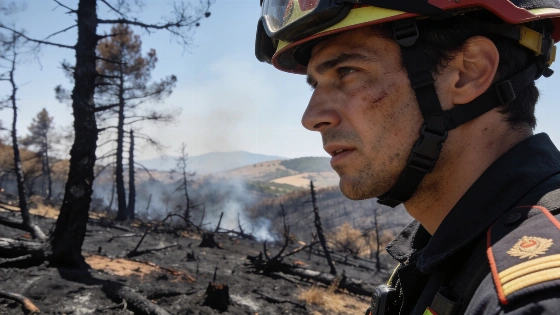
Wildfire risk has also escalated sharply. The region’s forests, which entered the summer drier than usual despite a relatively green spring, have suffered two major fires: the Vall d’Uixó blaze, which began on July 25 and consumed 9,600 hectares—making it the third most severe of the decade—and the Tírig fire, sparked by lightning on August 8, which burned nearly 1,000 hectares. Additional incidents in Soneja and the Serra Calderona have kept emergency services on high alert. By early August, Aemet reported soil moisture below 10% across much of the territory, turning the landscape into a tinderbox.
As the season shifts, attention is turning from heat and fire to the threat of torrential autumn rains, known locally as 'dana'. Last autumn, four red alerts were issued for severe storms, and the risk remains high with the Mediterranean Sea now three degrees warmer than usual. This elevated sea temperature acts as a powerful energy source for the atmosphere, increasing the likelihood of explosive rainfall events if atmospheric instability and cold air masses coincide over the region. The memory of the catastrophic 29 October dana, which claimed 231 lives in hours, remains fresh.
Authorities and meteorologists warn that while such extreme events are rare, the ingredients for dangerous autumn storms are present. The accumulated heat in the Mediterranean means that even as surface waters cool in September, deeper layers retain warmth, allowing rapid reheating and sustaining the risk. As highlighted in a recent report on storm alerts across Spain, the pattern of extreme weather is becoming more frequent and unpredictable.
Climate change is accelerating these shifts in the Mediterranean, with warming occurring 20% faster than the global average. Experts from the Centro de Estudios Ambientales del Mediterráneo (CEAM) note that the convergence of extreme heat and rainfall events multiplies their impact, posing new challenges for public health, emergency response, and infrastructure. The silent toll of heat is matched by the sudden danger of torrential rains, making adaptation and preparedness a growing priority for the region.
For context, the Mediterranean climate has traditionally featured hot, dry summers and mild, wet winters. However, recent years have seen a marked increase in both the frequency and intensity of extreme weather events. The combination of persistent heat, record sea temperatures, and unpredictable rainfall patterns is forcing authorities to rethink risk management strategies. Residents are urged to stay informed about weather alerts and to take precautions during both heatwaves and storm warnings, as the region adapts to a new climate reality.