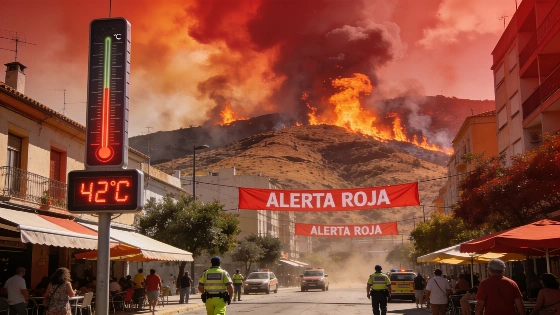
Spain is bracing for the most intense day of its third summer heatwave, as the Agencia Estatal de Meteorología (AEMET) activates a red alert for Thursday in Murcia and Comunidad Valenciana. The highest-level warning comes as temperatures are forecast to surge, particularly in the Mediterranean regions, intensifying the ongoing heat episode. AEMET’s Meteoalerta system provides geographically detailed warnings for adverse weather up to 72 hours ahead and updates them as conditions evolve, supporting civil-protection planning.
On Wednesday, twelve autonomous communities, along with Ceuta and Melilla, remain under weather alerts, though none have reached the red level. Orange alerts, indicating impressive risk, cover Andalucía, Aragón, Baleares, Castilla-La Mancha, Cataluña, and Madrid. Yellow alerts, for a lower level of risk, are in place for Castilla y León, Extremadura, Murcia, Navarra, La Rioja, Comunidad Valenciana, Ceuta, and Melilla.
AEMET spokesperson Rubén del Campo said temperatures are expected to climb sharply across most of the country, while some Mediterranean coastal areas may see a slight drop. Temperatures are likely to reach 39°C to 42°C in the east, center, and south of the peninsula, as well as in the Balearic Islands. The north, particularly the Cantabrian region, will be milder, but conditions overall will remain uncomfortably warm.
As the heat intensifies, wildfire risk is classified as very high or extreme across large parts of Spain. Soaring temperatures and dry conditions raise the danger, particularly when strong winds develop, prompting authorities to urge caution and preparedness. The risk goes beyond temperature: Reuters reported that abundant vegetation grew during a wet winter before drying out in summer. Declining rural populations and abandoned farmland can also allow shrubs and trees to form more continuous, combustible cover.
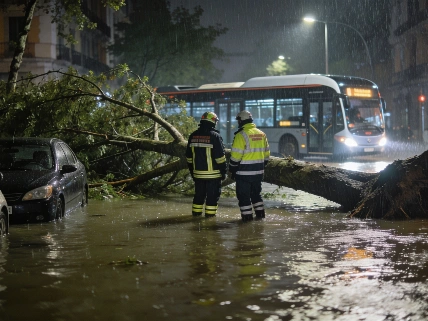
Storm clouds are expected to develop in the afternoon, especially in Cataluña, Comunidad Valenciana, eastern Castilla-La Mancha, and Murcia. These storms are often dry, bringing little or no rainfall, but may produce frequent lightning and hail, along with sudden gusts of wind. Yellow thunderstorm alerts have been issued in Andalucía, Aragón, Castilla-La Mancha, Cataluña, Murcia, and Comunidad Valenciana. Suspended dust will also bring calima, hazy skies and a stronger sensation of heat.
The 2026 fire season shows how these overlapping conditions can compound the danger. Information from Reuters, citing the European Forest Fire Information System (EFFIS), more than 300,000 hectares burned in Spain during the season, and at least 21 people died. A major fire near Burgohondo in Ávila began on 22 July after sparks from heavy machinery ignited vegetation. It later merged with fires near Almorox and San Martín de Valdeiglesias. The blaze ultimately burned about 63,000 hectares and forced more than 60,000 people to evacuate. Reuters reported that crews did not extinguish the final hotspots until 3 October.
Temperatures are forecast to drop markedly on Friday, with a sharper fall expected on Saturday. Meteorologists anticipate a return to more typical, even cooler-than-average, conditions for June. The respite may be brief: models suggest temperatures could surge again as early as Sunday, potentially bringing another spell of intense heat next week.
This pattern of extreme weather is not isolated. Earlier this summer, Spain saw similar conditions, as Saharan dust and storms disrupted daily life in Mediterranean and southern regions. For more on how these weather phenomena have affected the country, see the report on Saharan dust and muddy rains sweeping across Spain.
Spain's heatwaves have become more frequent and severe in recent years, a trend experts link to broader climate shifts affecting southern Europe. The heat also formed part of a wider European public-health emergency: the Associated Press reported that a study estimated roughly 50,000 heat-related deaths across Europe in summer 2026, attributing about two-thirds to human-caused climate change. AEMET's alert system uses yellow, orange, and red levels to inform the public and authorities about escalating risks. Residents in affected areas are advised to follow official guidance and stay hydrated. They should avoid outdoor activity during peak heat and watch for updates as conditions evolve.