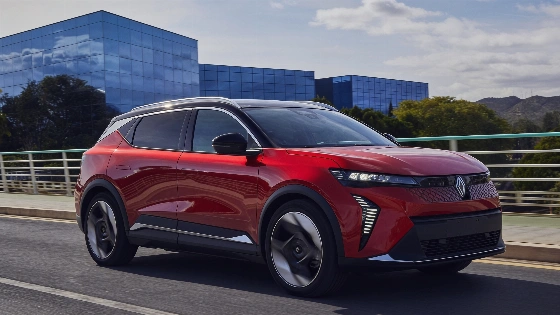
Renault will invest €600 million in Spain by 2030 to launch five new models, including two electric vehicles, and build a battery assembly line in Valladolid. The move secures thousands of jobs and marks a turning point for Spain’s auto industry.
Renault is putting €600 million into its Spanish factories. Five new models are coming, two of them fully electric. Valladolid will get a battery assembly line by 2030. This is more than just money. It puts Spain at the center of Renault’s plans as the European car market faces its biggest shake-up in years.
For 75 years, Renault’s plants in Valladolid and Palencia have focused on combustion and hybrid cars. That changes now. For the first time, both sites will build electric vehicles. Palencia will get the RGEV Medium 2.0 platform. This is Renault’s top system for C-segment electric cars. Official documents call it an 800-volt platform built for future battery and powertrain tech. Valladolid will add a battery assembly line. Spain is now locked into Renault’s electrification roadmap. Industry publications say the investment comes from Renault’s own funds and Spanish government support. The goal is clear: get the plants ready for the next wave of models.
The RGEV Medium 2.0 platform will be implemented at the Palencia plant, enabling the production of two new medium-sized electric models for the first time in Spain.
This move lands as Spain’s auto sector faces falling output and changing demand. The article notes a 9.2% drop in national vehicle production and an 11.7% fall in exports in the first four months of 2025. At the same time, alternative energy vehicles grew 32% year-on-year in April 2025. These numbers have not been independently confirmed in the latest ANFAC reports and should be checked against the official monthly release. Still, the challenge is obvious. Spain must protect jobs and output while shifting to electrification and hybrid tech.
Renault’s futuREady plan is a direct answer to this. The company is not dropping combustion or hybrid cars overnight. Instead, it is making its Spanish plants flexible. They will build both electric and hybrid vehicles as the market changes. This two-track plan is backed by a new labor deal with unions for 2026–2028. More than 6,000 direct jobs are covered. The agreement also sets the stage for tech upgrades. Leading automotive industry sources report that Renault’s investment is directly tied to keeping jobs at Valladolid and Palencia for the long term.
Spain’s role inside Renault keeps growing. The country already has industrial, commercial, and R&D sites in Madrid, Valladolid, Palencia, and Sevilla. There are 482 sales and service points for Renault, Dacia, and Alpine. The new investment builds on this base. Spain is now even more important in Renault’s electric vehicle plans. The country is part of the next wave of car technology.
Renault’s investment in Spain is part of a broader international electrification strategy, with the group aiming to launch 22 new models in Europe by 2030, 16 of which will be fully electric.
Renault’s big shift started with the Renaulution strategy. The company split into focused business units: Ampere for electric vehicles and software, Horse Powertrain for combustion and hybrid systems. Ampere leads electric vehicle development in France. But now, with the RGEV Medium 2.0 platform and battery line coming to Spain, electrification is no longer just a French project. Horse Powertrain brings together Renault’s and Geely’s hybrid and combustion assets. Aramco owns 10%. Spain’s engine and transmission plants, including Sevilla, are part of this global network. As long as there is demand for hybrid and combustion cars, Spain stays in the game.
The stakes are high. European carmakers are under pressure to cut costs and move faster. Competition from China is fierce. Volkswagen recently cut its forecasts and took a €10 billion hit from rising costs. Renault’s Spanish investment is a direct answer. The company wants its factories to stay competitive and ready for new tech.
Public support matters too. Renault’s €600 million plan uses both its own money and national and regional aid. Spain’s central government and the Junta de Castilla y León are backing the project. This is part of a wider European push to keep car manufacturing at home as electrification and digitalization speed up and costs rise.
Spain’s auto industry depends on exports. In April 2025, 86% of vehicles made in Spain went abroad. Germany, France, Turkey, Italy, and the UK are the main buyers. To keep production mandates, Spain must adapt fast, use advanced platforms, and keep quality high. Renault’s decision to expand in Spain is tied to the strength and flexibility of its local plants. Spain has passed the test for the next industrial cycle.
For Spanish workers and suppliers, the impact is real. Thousands of jobs are secured. New skills and technologies are coming to the country’s factories. For the market, this shows Spain is not just holding on to its car industry. It is shaping what comes next. As reported earlier, new electric models like the Megane E-Tech are already changing the competitive landscape.
Renault is not swapping one technology for another overnight. The company is building a strong, flexible base that can handle the uneven pace of electrification across Europe. By betting on both electric and hybrid production in Spain, Renault is keeping its options open as rules and markets shift. This is a practical, forward-looking move. Spain is now a key player in the next chapter of European car manufacturing—if it keeps delivering on quality, flexibility, and tech readiness.