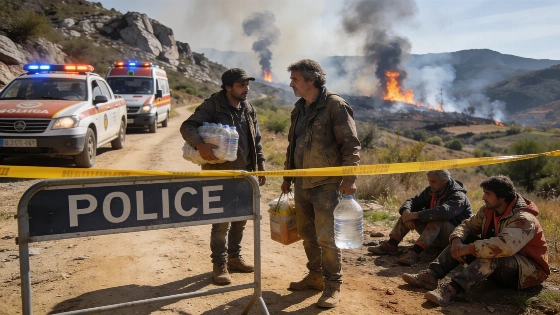
Dozens of residents evacuated from Sotillos de la Adrada are trying to return. Volunteers inside the village are exhausted after days battling the fire. Authorities maintain strict controls, blocking most attempts to re-enter.
In the heart of the Tiétar Valley, the wildfire that forced mass evacuations from Sotillos de la Adrada and nearby villages has triggered a tense standoff between residents and authorities. Despite official orders and reinforced police checkpoints, many locals are determined to return, driven by concern for neighbors and the need to relieve exhausted volunteer firefighters who stayed behind.
Since Saturday, when the evacuation order was issued, most residents complied and left their homes. However, around fifty people, including the mayor Juan Pablo Martín, remained in Sotillos, working to contain the flames and protect livestock. Communication with those inside the village has become increasingly difficult due to frequent power, water, and network outages. Supplies are running low, and requests for portable batteries and non-perishable food have multiplied as the crisis drags on.
Outside the exclusion zone, frustration is mounting. Idoia, evacuated to Talavera de la Reina, spends her days searching for alternative routes back to Sotillos, her car loaded with water and food. She and others coordinate through WhatsApp groups, sharing updates and plotting rural detours in hopes of bypassing police controls. Attempts to re-enter via Navas del Rey, Pelayos de la Presa, and Aldea de Fresno have all failed, with authorities strictly enforcing the ban on access to affected areas.
Javier Poza, who fled Sotillos on his motorbike after the evacuation alert, now waits in Talavera’s fairground shelter. He describes the chaotic escape, with traffic jams and a sense of every person for themselves. Despite the relative comfort of the shelter, he remains focused on the situation back home, ready to return if the opportunity arises. The list of urgent needs from those inside—tools, food, masks, chainsaws—continues to grow, while the chance to deliver them remains slim.
On Monday afternoon, a group of about thirty residents gathered on the outskirts of Talavera, organizing a supply convoy. Dressed for rugged terrain, they debated whether to obey the authorities or risk entering by back roads. Tension rose as police arrived to reiterate the restrictions. Some managed to slip through, but most were turned back, fueling further anxiety in the online groups.
Exceptions have been rare. In Cardiel de los Montes, after lengthy negotiations, members of the animal welfare group La Voz Animal were allowed to enter with supplies for at-risk animals. Their access was granted only after pressure from those still inside the exclusion zone. For livestock owners, the situation is complicated by the requirement to present property documents—often left behind in the rush to evacuate.
The current crisis in Sotillos echoes similar emergencies across Spain in recent years. For example, during previous wildfires in Ávila and Madrid, thousands were displaced and shelters in Talavera de la Reina became temporary homes for evacuees, as detailed in reports on earlier mass evacuations. These repeated incidents highlight the ongoing challenges faced by rural communities during extreme fire events, from logistical hurdles to the emotional strain of separation and uncertainty.
Spain’s wildfire season has grown longer and more intense, with climate conditions contributing to larger, harder-to-control blazes. The experience in Sotillos de la Adrada underlines the difficulties of balancing public safety with the urgent needs of those left behind. As authorities maintain strict access controls, the resilience and determination of local residents remain central to the unfolding response.