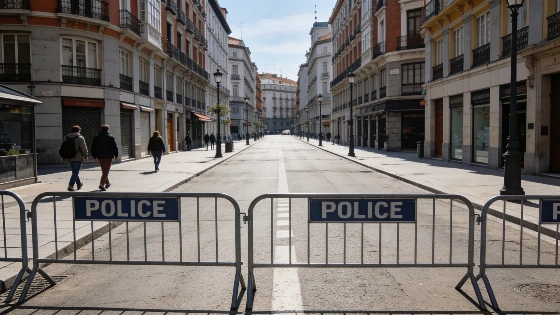
Barcelona to Close City Center and Transport for Tour de France 2026 Start. Barcelona authorities have announced sweeping traffic restrictions due to the Tour de France 2026. Private vehicles will be banned in key areas. The closures will also affect the metro, buses, and bike services.
From July 2 to 5, Barcelona will introduce unprecedented traffic restrictions due to the start of the Tour de France 2026. City authorities have announced that during these days, private vehicles will be almost completely blocked in six out of ten districts, including Eixample, Sants-Montjuïc, and Sant Martí. The main race routes will become impassable barriers for cars, and public transportation—including buses, trams, Bicing, and Aerobús—will be severely restricted.
On July 2, the presentation of the 23 participating teams will take place in the Sagrada Família area and on Gaudí Avenue. The first closures will begin already on the evening of July 1, and from 2:00 p.m. the next day, all traffic in this sector will be completely halted. In the evening, after the official ceremony, access will be restored in stages. Organizers promise an extraordinary show with a focus on the city’s energy, culture, and symbolism.
On July 4, Barcelona will host a team time trial: the route will run from Parc del Fòrum to Montjuïc, affecting key thoroughfares—avenida del Litoral, Bac de Roda, Llull, Josep Pla, rambla Guipúscoa, Aragó, paseo de Gràcia, Mallorca, Lepant, Tarragona, plaza Espanya, and Maria Cristina. Widespread closures will start at 12:00, and from 1:30 p.m. traffic will be fully stopped until the evening. Eleven bus routes will be suspended this day, and some Bicing stations will be closed.
On July 5, the race will start in Tarragona and finish in Barcelona. Cyclists will enter the city via carretera de Collblanc, then proceed along travesera de les Corts, calle de Sants, Creu Coberta, and reach plaza Espanya. The main restrictions will affect the Montjuïc area, where traffic will be fully closed from 1:30 p.m., and from 3:45 to 5:45 p.m. the hill will be isolated. Authorities note that due to constraints related to African swine fever, the route had to be adjusted, abandoning the section through Collserola.
For pedestrians, more than 50 temporary crossings will be set up along the route, including footbridges and safe routes through metro vestibules. Authorities recommend using the metro, which will increase its capacity by 40%—especially on lines 1 and 5. However, on July 2, Sagrada Família station on line L2 will be closed from noon. For cyclists, six free secured parking areas will be arranged near key points of the race.
During the week, loading and unloading schedules will be adjusted, waste containers will be temporarily relocated, and access to parking near the route will be restricted. In the evening, city landmarks, including the Arc de Triomf and the main fountains, will be illuminated in yellow in honor of the Tour de France.
According to city police estimates, up to 80,000 people will gather for the team presentation, up to 600,000 spectators are expected on the race route on July 4, and the final stage at Montjuïc may attract 170,000. For comparison, large-scale urban events in Spain, such as parades or sports finals, also require extensive security measures and road closures—as was the case during major events in other regions, as previously reported in the article on restrictions at sports tournaments.
The Tour de France, the world's largest cycling race, will start in Barcelona for the first time since the 1992 Olympics. The introduction of such strict measures is due to the need to ensure the safety of participants and spectators, as well as the scale of the event. It is important to note that these measures may affect the daily life of residents, business operations, and logistics. Authorities are proactively informing residents about detour routes and recommend planning travel in accordance with the new regulations.