A drivers' stoppage halted Rodalies after days of heavy rain. Trains were suspended across key routes, while buses and other services could not handle the demand.
At about 07:30 on 7 October, train drivers refused to take Rodalies services out across the network. They wanted technical reports and agreed inspections of sections hit by the storms. Thousands of passengers reached stations to find trains suspended, and alternative transport quickly filled up.
The stoppage followed several days of delays, canceled routes and sections cut off by storm damage. Some passengers had already switched to buses or private cars. This time, they faced another breakdown with too little warning outside some stations. Replacement services ran, but they could not carry everyone affected.
Some areas of Catalonia recorded more than 300 litres of rain per square metre. The northern sections of the R4 and R2 lines were among the routes most seriously affected by the storm damage.
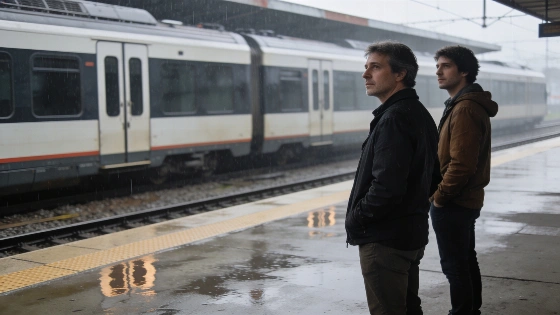
Barcelona showed how far confidence in the network had fallen. The platforms at plaça Catalunya were unusually quiet, and the first trains to appear were almost empty. At Sants, some passengers decided not to board because they feared being stranded again.
One traveller from Terrassa had reached the city through Ferrocarrils de la Generalitat and the metro. She said she no longer trusted Renfe after finding no Renfe trains and too few people outside the station to explain what was happening.
The same caution spread beyond Barcelona.
In Girona and Figueres, staff directed passengers to buses bound for Barcelona or intermediate stations on the R11. The buses ran with some regularity, but the alternative trips still took longer. A passenger who arrived in Girona from Figueres called the journey uncertain and said conditions had worsened day after day.
Two English tourists planning to visit Figueres and Cadaqués had to travel by bus. A resident of Figueres used the replacement service to reach a medical appointment.
The stoppage began at about 07:30 on 7 October, when drivers refused to take trains out across the network without technical reports and agreed inspections of storm-affected sections. Protecció Civil said that, after repairs, empty trains would have to make test runs before each restored section could be cleared for normal passenger service.
Girona station showed the gap between an announcement and a working recovery. Officials had announced a return of trains, but the first Rodalies service listed on the screens was not due until 4:15 in the afternoon. Passenger numbers stayed low, while the high-speed trains at the same station ran full.
Mataró faced a similar problem in a different form. The first R1 train towards L'Hospitalet de Llobregat finally left at 9:40. By then, many passengers had chosen the direct bus from plaça de les Tereses to Barcelona because they expected the disruption to continue.
Queues were described as interminable. Renfe also prepared a bus to Badalona, where travellers could continue by metro from Pompeu Fabra. That option did not run until rail services resumed.
When the first train towards Barcelona became available, informers went outside Mataró station to tell passengers directly. The next announced service towards L'Hospitalet was an hour later, so travellers had to choose between waiting and taking an alternative bus to Badalona.
The earlier storms had already caused earlier disruption across Catalonia. Weather damage had hit transport routes, and the new stoppage added a labour and safety dispute to an infrastructure system still struggling to restore predictable journeys. By 5 October, the R7 and R8 routes remained fully interrupted. Problems affected at least six Rodalies and regional lines.
No confirmed infrastructure accident triggered the immediate dispute. SEMAF said drivers would not guarantee services without technical documents and coordinated inspections. Renfe and Adif said the infrastructure was safe after the required checks. Rodalies director Oscar Playa called the episode a labour conflict and said trains had run without incidents the previous day, according to Europa Press.
Renfe told passengers to seek other transport while the entire network was suspended. The operator and local authorities put buses on damaged sections, but those buses could not absorb the normal rail passenger flow. Rodalies officials expected services to be almost completely normal by midday. The main exceptions were R4 Nord and R2 Nord, where buses still ran on some sections.
The dispute also had a political and labour side. Drivers opposed the planned transfer of Rodalies management to the Generalitat and wanted the system to remain under Renfe. That added a fight over the network's future management to the immediate argument about safety checks after the storms.
RTVE reported a gradual restoration after Renfe and Adif confirmed that sections were safe. SEMAF continued to demand documentary proof of the inspections.
For passengers, the breakdown involved more than missing trains. Repeated interruptions, poor information at station entrances and replacement buses that could not handle demand all fed the same result. The safety claim explains why drivers stopped work, but passengers encountered no dependable recovery plan when storm damage and industrial action hit at the same time. After several days of disruption, Rodalies had lost the trust of many people who rely on it every day.