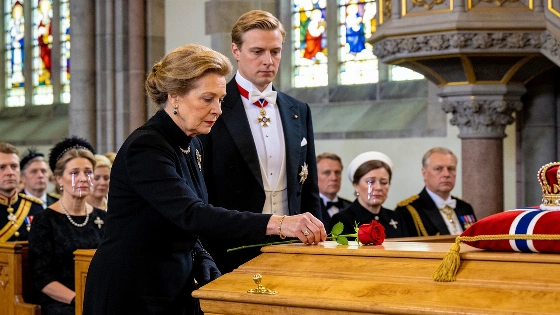
Emotions surfaced quickly at the Royal Palace in Oslo, where the Norwegian royal family gathered with dignitaries from across Europe just hours after Harald V's funeral. The formal greeting line was interrupted when Ana María de Grecia stepped out of place to hug Queen Sonia, leaving the Grand Duke of Luxembourg waiting. The unscripted, slightly awkward moment revealed relationships that official ceremonies usually keep hidden.
Inside, King Haakon and Queen Sonia, joined by Princess Ingrid Alexandra, thanked each guest in person. Mette-Marit was absent, still recovering from a lung transplant, a reminder of the family's recent hardships. More than 850 invitations went out, but not everyone could attend. The absences were as noticeable as the guests who came. Norwegian officials and European media confirmed that the reception was planned in advance as part of the post-funeral program, with a formal greeting for foreign delegations and state representatives.
Prince Albert and Princess Charlène of Monaco were among the first to arrive, setting off a steady stream of European royals. Personal gestures also stood out. Victoria of Sweden, bothered by the heat, fanned herself while greeting King Haakon. Denmark's King Federico X greeted Queen Sonia with a kiss and raised fists, briefly lifting the somber mood.
Some relationships stayed out of sight. Felipe VI and Letizia of Spain skipped the reception, though they had said their goodbyes to the Norwegian royals earlier that day. Felipe VI attended the pre-funeral dinner with Doña Sofía, keeping Spain's connection to Norway's monarchy visible. This pattern of selective appearances reflects the boundaries other royal families set, as earlier reports about Harry and Meghan's status in the UK show in earlier reports.
For the younger royals, the evening offered a chance to build new ties. Amalia of the Netherlands and Ingrid Alexandra of Norway, both heirs, shared a candid moment and a parting kiss, an easy exchange that contrasted with the stricter protocol elsewhere in the room.
Outside, people gathered quietly, watching the palace windows for signs of what was happening inside. The mood moved between ceremony and warmth as guests balanced duty with personal connection. Carefully organized, the reception still became a stage for subtle power plays and honest gestures, showing how Europe's royal families are changing.
The Oslo gathering went beyond a farewell to Harald V: it put tradition and hierarchy on public display, with loyalty also in view. The Norwegian royals let protocol bend when emotion broke through, unlike the stricter rules elsewhere in Europe. The evening honored a king while exposing shifting alliances and vulnerabilities among Europe's royal houses, where formal gestures sit within a complicated web of relationships shaping the future of monarchy.