

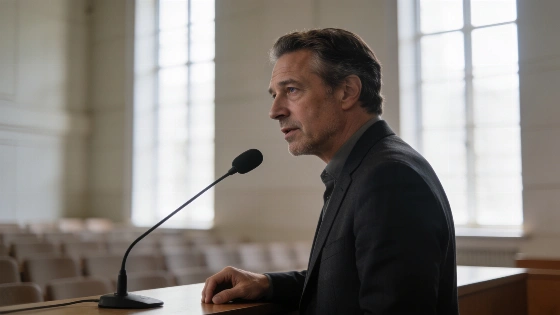
RTVE president José Pablo López will ask the board to extend Spain's Eurovision suspension. Israel's continued participation remains the deciding issue for 2027.
Spain is unlikely to return to Eurovisión in 2027. On 22 September 2026, José Pablo López said he would propose extending the country's suspension. The RTVE president tied that position to Israel's continued participation and the situation in Gaza. RTVE's Board of Directors still has the final say, but López has made the direction clear.
At a hearing before the Joint Parliamentary Commission for RTVE's Oversight, López said he would ask the board to keep Spain out of the contest. He said the suffering of the Palestinian people cannot be treated as separate from a television competition. For RTVE, the dispute is no longer about the result of a song contest or the way its voting system works.
If the Board of Directors approves the proposal, Spain will miss two Eurovision contests in a row: the 2026 edition in Vienna and the 2027 competition.
The dispute has already led to a clear break with Eurovisión. Spain did not take part in the 2026 edition in Vienna. RTVE also refused to broadcast the shows after the European Broadcasting Union decided to keep Israel in the competition.
That decision came after months of pressure from RTVE.
The conflict grew after the 2025 contest, where Israel finished second. RTVE then called for a full review of the voting system. It wrote to the European Broadcasting Union asking for an examination of Israel's participation, the balance between jury and public votes, and an independent audit. On 16 September 2025, RTVE's Board of Directors adopted the unprecedented position that Spain would not participate in 2026 if Israel remained in the contest.
The dispute has also involved other public broadcasters. The BBC and Ireland’s The Journal reported that RTÉ withdrew from Eurovision because Israel remained in the competition and because of the humanitarian catastrophe in Gaza.
The condition took effect on 4 December 2025. That day, the European Broadcasting Union approved rule changes but kept Israel in the contest. RTVE confirmed Spain's withdrawal. Ireland, Iceland, the Netherlands and Slovenia also stayed away from Vienna 2026. During the final, RTVE displayed the message that Eurovisión is a contest while human rights are not.
The European Broadcasting Union has since introduced more changes for Eurovisión 2027. One removes the automatic requirement for the winning country to host the next contest if a conflict makes that impractical. The changes have not settled RTVE's objections. The Netherlands and Ireland have also said they will not participate in 2027 if Israel remains in the field.
The institutional dispute is unfolding alongside scrutiny of Spain's public bodies. A previous investigation examined alleged pressure on investigators in a separate case involving Sánchez's family. That case does not determine RTVE's decision. It places the broadcaster's demand for ethical safeguards within a wider news cycle focused on institutional conduct.
RTVE says it has pressed the European Broadcasting Union to renew its ethical standards and prevent political instrumentalisation. López acknowledged that the measures already adopted have not met the broadcaster's demands. The issue is not whether Eurovisión has changed its rules at all. It is whether those changes address RTVE's objection to Israel's continued presence. El Constitucional has reported that the Spanish broadcaster still ties its position to Israel's participation and the war in Gaza.
Eurovisión 2027 is scheduled to take place in Burgas, Bulgaria. Spain's absence is not yet final because the Board of Directors must still vote on López's proposal. The political message is already firm. RTVE is choosing to extend the boycott rather than accept a partial response from the European Broadcasting Union while Israel remains in the contest.



