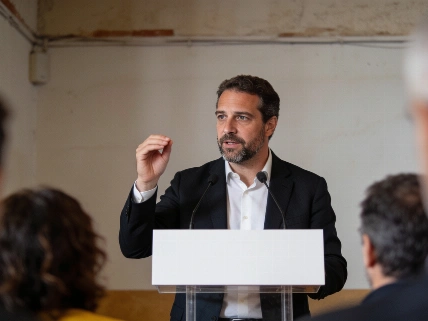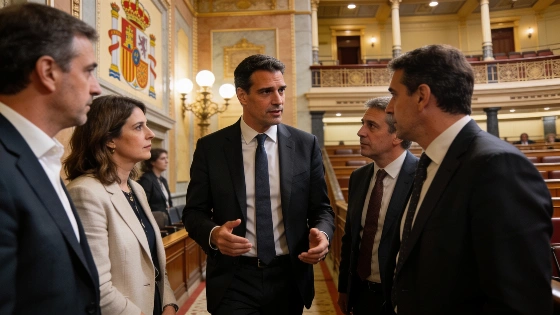
The election was confirmed after Congress and the Senate were dissolved. The vote will take place on November 29, with the campaign running from November 13 to 27, information from information published by La Moncloa.
Pedro Sánchez heads into the election with the polls against him and the space to the PSOE’s left still fragmented. His strategy is to turn a parliamentary defeat into a contest over housing and social protection.
The political trigger was Junts’ decision to sink the housing decrees despite prior talks with the government. Socialist leaders had already considered an election call almost certain before that vote. Afterward, the mobilization sparked by the eviction of Maricarmen Abascal in Madrid and the Sol encampment shifted public attention to access to housing.
The government’s revived housing package contains 21 measures, information from La Moncloa. It includes tax incentives for tenants and landlords, support for social housing, protections against evictions and limits on rent increases.
La Moncloa wants the November 29 vote framed as a choice between expanding progressive majorities and allowing an alternative formed by the PP and Vox. Sánchez presented that choice in his official statement, linking the result to new measures against inequality and stronger public services.
Housing will face a parliamentary test before the campaign. The Council of Ministers has revived the decrees rejected by Congress and plans to put them to a vote in the Permanent Deputation during the first week of November. The numbers in that body allow the government to proceed without Junts’ support.
The two royal decree-laws were published in the BOE on October 7. Their approval now rests with the Permanent Deputation, since Parliament has been dissolved.
The package includes a plan worth up to 10 billion euros to finance loans for home purchases. The Ministry of Housing and Urban Agenda says the measure triples its current budget and exceeds by 9.5 billion euros the housing budget under Rajoy’s government. Within that total, the ICO’s new line offers interest-free loans of up to 50,000 euros to people buying their first home. Those terms give the plan a more specific scope than the broad promise of mortgage assistance.
Alongside financing for buyers, the government has set aside 280 million euros in guarantees for industrialized construction, plus another 400 million for social housing providers, according to La Moncloa. The second decree, which focuses on rental contract stability, is due to take effect on November 15, 2026, if approved.
The government also plans to raise the minimum wage before the election. The pension increase is still under review because it usually depends on November’s CPI figure. Ministries have been told to speed up pending measures that can be approved by royal decree without returning to Congress.
That window for government action will be short. The government will remain fully operational until the election and wants to use every Council of Ministers meeting and BOE publication to announce concrete decisions before the campaign begins.
The operation has another aim: containing the fragmentation of the progressive vote. Socialist leaders say nearly one million left-wing voters would never choose the PSOE ballot, but are trying to draw in those who might switch in constituencies where votes for parties to the PSOE’s left fail to translate into seats.
A previous analysis of housing fits into that calculation, having already set out two distinct electoral paths for Sánchez and Alberto Núñez Feijóo.
The PSOE’s message is direct: it wants to present itself as the force capable of sustaining a progressive government and blocking an alliance between the PP and Vox. The strategy also seeks to claim social causes contested by Sumar and limit the cost of votes being split.
Corruption and migration policy are being kept out of the PSOE’s spotlight. Alberto Núñez Feijóo is campaigning on a choice between corruption and change, while the government insists the justice system will follow its own course. Félix Bolaños has rejected the idea that legal proceedings should set the campaign agenda and argued that voters will decide which housing policy to pursue.
The legal front remains open. A court has summoned Sara Aagesen as a witness during the final week of the campaign over a PP complaint concerning aid granted to Air Europa after the pandemic. Meanwhile, the Anti-Corruption Prosecutor’s Office has called the PP’s request to charge the PSOE in the Leire Díez case premature.
The November 29 election puts housing at the center of the campaign, with the decrees serving as evidence of government activity and aid and wage measures presented as immediate offers. The PSOE’s strategy also relies on tactical voting to concentrate support. Sánchez cannot control the fragmentation of his political camp or the judicial agenda, but he has chosen the ground on which to fight the election.