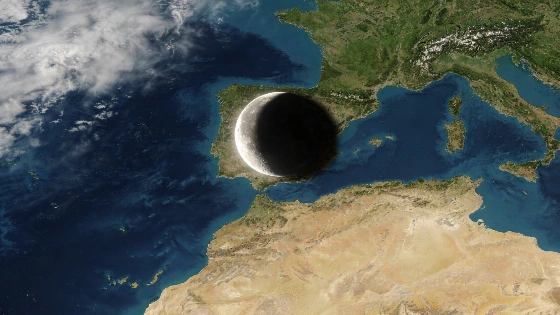
The total solar eclipse on August 12 cast a visible shadow over Spain. Meteosat-12 provided unique satellite images of the phenomenon. Millions witnessed the event as the lunar shadow moved across the region.
On August 12, the total solar eclipse brought a rare astronomical spectacle to Spain, as the shadow of the Moon swept across the North Atlantic and the Iberian Peninsula. The event was closely followed by millions, with the European satellite Meteosat-12 capturing a series of striking images from space. These images, taken at ten-minute intervals, show the dark lunar shadow moving steadily over the clouds and ocean, eventually merging with the approaching night from the east.
The satellite's perspective offered a unique view of the eclipse's progression, highlighting how the phenomenon unfolded above both land and sea. The shadow's path was clearly visible as it crossed over the peninsula, providing scientists and the public with a rare opportunity to observe the event from a vantage point far above the Earth's surface. According to El País, the images illustrate the precise movement of the eclipse as it advanced west to east, gradually fading as daylight gave way to evening.
While millions on the ground experienced the dramatic dimming of sunlight, the satellite's data added a new dimension to the understanding of such celestial events. The ability to monitor the eclipse from space not only enhances scientific observation but also allows for a broader appreciation of the scale and impact of these occurrences. For those interested in the practical aspects of eclipse viewing, including safety measures and the importance of protective eyewear, a detailed overview is available in this guide to eclipse safety protocols in Spain.
Solar eclipses, especially total ones, are infrequent in Europe, making this event particularly significant for Spain. The Meteosat-12 satellite, operated by EUMETSAT, plays a crucial role in monitoring weather and atmospheric phenomena across the continent. Its ability to document rare events like eclipses adds to the scientific record and supports ongoing research into Earth's atmospheric dynamics. The next total solar eclipse visible from Spain is not expected for several years, underscoring the importance of this recent observation for both researchers and the general public.