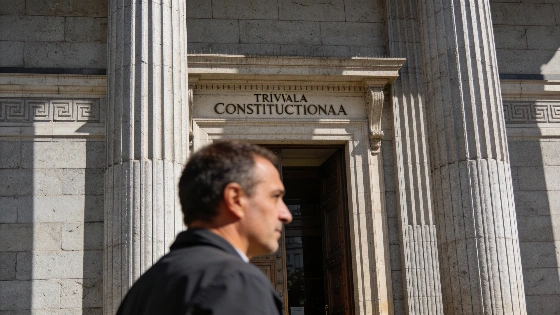
The Constitutional Court’s lawyers say the Ombudsman’s appeal over voting rights for people naturalised under the law of grandchildren is premature while the Supreme Court still accepts submissions. The case affects 163,020 people before the 29 November election.
The suspension currently affects 163,020 people who obtained Spanish nationality under the Ley de Memoria Democrática and live abroad. They may be unable to vote in Spain’s 29 November general election unless consular offices certify that they are descendants of exiles. The measure concerns their inclusion in the CERA register, Spain’s electoral roll for citizens permanently resident overseas; it does not revoke their citizenship. Lawyers for the Tribunal Constitucional say the Defensor del Pueblo went to court before the Tribunal Supremo had finished considering the matter.
The legal opinion says the appeal was filed while affected parties still had an opportunity to make submissions to the Supreme Court. That deadline opened on Monday, 19 October, and closes on Friday, 23 October. The lawyers argue that an amparo appeal should follow a final ruling, once the ordinary judicial route has been exhausted. They also say the Supreme Court could still change its interim measures after reviewing the parties’ arguments.
The opinion was prepared at the request of magistrate Enrique Arnaldo. El Mundo first reported it, and EFE has seen the document. The Tribunal Supremo initially imposed the precautionary measures on 10 September and upheld them on 12 October. The lawyers argue that the measures are therefore not final. The state’s legal service has said that checking every case individually before the election would be “materially impossible” given the short timetable.
The fourth section of the Tribunal Constitucional referred the question of admitting the appeal to the full court, or Pleno, on 19 October, citing the case’s significance and the approaching election. The 12-member court was expected to decide on Wednesday, 21 October, whether to admit the appeal; referral to the Pleno does not itself overturn the Supreme Court’s measures. The case concerns the suspension of voting rights for people who obtained Spanish nationality under the Ley de Memoria Democrática, commonly known as the law of grandchildren.
Tribunal Constitucional president Cándido Conde-Pumpido said the court normally intervenes after judicial proceedings have ended. He also confirmed that a rapporteur had been appointed and a written legal study commissioned. With the election approaching, he said, the court could not deliberate indefinitely.
The Defensor del Pueblo, led by Ángel Gabilondo, filed the amparo appeal on 16 October and asked the Tribunal Constitucional for urgent interim protection so those voters could take part in the 29 November parliamentary election. Gabilondo argues that the affected people remain valid Spanish citizens and that restricting overseas residents while not imposing the same measure on similarly naturalised citizens living in Spain raises concerns about voting rights and equality, as well as access to judicial protection. The Supreme Court’s stated concern is the reliability of the CERA register ahead of the election.
The 29 November vote is also the subject of party preparations: PSOE’s candidate announcement named Pedro Sánchez for the election. For the people affected by the suspension, the immediate question is whether the Tribunal Supremo changes its interim measures after the submissions period. The Defensor del Pueblo has said it reviewed the Supreme Court’s 12 October decision after receiving complaints from individuals and organisations.