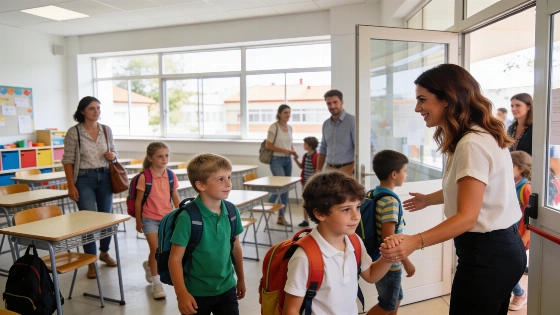
The 2026/2027 academic year in Spain will see students returning to classrooms on different dates depending on their region and educational stage. Christmas and Easter breaks, as well as the last day of classes, also vary widely, making it essential for families to check local calendars.
Families planning for the 2026/2027 school year in Spain face a patchwork of start dates, holidays, and term endings, as each autonomous community sets its own calendar. The result is a landscape where the first day back, Christmas and Easter breaks, and the final day of classes can differ not only between regions but sometimes even between provinces or individual schools.
Navarra is set to open its classrooms as early as September 4, while Madrid will welcome younger students on September 7 and Catalonia follows on September 8 for most compulsory stages. In other regions, such as Andalucía and Castilla y León, the start dates are staggered by educational level, with secondary and vocational students often beginning later than those in primary or infant education.
Regional Variations
Official calendars published up to August confirm that no single date applies nationwide. For example, Andalucía schedules the return for infant and primary students on September 10, but secondary, Bachillerato, and FP students start on September 15. In Aragón, classes begin on September 8 for most, but vocational students wait until September 10. These differences extend to the end of the school year, with some regions finishing as early as June 17 (Catalonia, 1º Bachillerato) and others stretching to June 24 (Castilla y León, depending on the stage).
Christmas and Easter holidays are equally fragmented. While La Rioja sets Christmas break from December 23 to January 6, Catalonia extends it to January 7, and Navarra pushes it to January 10. Easter holidays can range from March 20–29 in Catalonia to March 25–April 4 in La Rioja, with additional local and regional holidays further complicating planning for families.
Local Adjustments and Exceptions
Some communities, such as Navarra and País Vasco, allow individual schools to fine-tune their calendars within regional guidelines. This autonomy means that even within the same city, students might have different days off. Andalucía, for instance, introduces provincial variations, and some municipalities add extra non-school days, as seen in Badajoz, where local adjustments can create additional breaks.
Families with children in Bachillerato or Formación Profesional should pay close attention to exceptions, as these stages often have unique calendars or earlier end dates. For those seeking financial support, the government’s MEC grants for 2026/2027 are already open for application, with updated criteria and increased aid for eligible students.
Holiday Disparities
The lack of a unified calendar means that Christmas and Easter breaks rarely align across Spain. This can complicate travel and childcare arrangements, especially for families with children in different regions or educational stages. The situation is further complicated by local holidays and days of free disposal, which schools can allocate as they see fit.
For families with children requiring special educational support, additional government assistance is available, reflecting the growing recognition of diverse needs within the Spanish education system.
Why Local Calendars Matter
Given the complexity, families are strongly advised to consult their school’s final calendar before making travel or work plans. As highlighted by the experience in Badajoz, municipal decisions can add unexpected days off, underscoring the importance of checking with each school directly.
While the decentralized approach allows regions to tailor the academic year to local needs, it also creates challenges for national coordination. This mirrors broader trends in Spanish policy, where regional autonomy often leads to significant differences in daily life, from education to consumer practices. For example, as noted in a recent analysis by russpain.com, even national retailers like Mercadona must adapt their policies to local regulations, delaying initiatives such as the 10-cent deposit scheme for beverage containers (see more on how regional rules affect national rollouts).
Ultimately, the 2026/2027 school calendar highlights both the flexibility and the complexity of Spain’s regional system. For parents, teachers, and students, staying informed and checking official sources remains the best way to avoid surprises as the new academic year approaches.