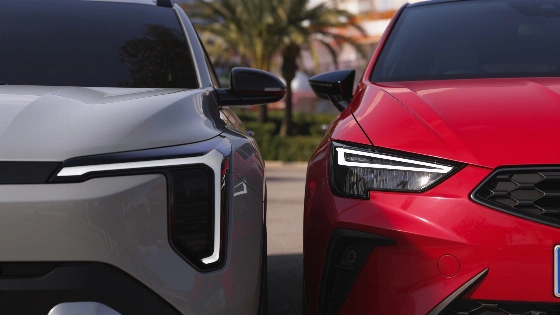
The Seat Ibiza and Kia Stonic target drivers seeking affordable, practical cars. We compare their engines, space, features and pricing to see which model stands out for buyers in Spain’s competitive entry-level market.
Choosing between the Seat Ibiza and Kia Stonic is a real-world dilemma for Spanish drivers who want a new car without overspending. Both models promise strong value, but their approaches differ: the Ibiza is a classic hatchback with a long-standing reputation, while the Stonic offers the higher stance and extra versatility of a compact SUV. The question is not just which is cheaper, but which delivers more for the money in 2026.
Dimensions and Practicality
The Seat Ibiza measures 4,059 mm in length, 1,780 mm in width, and 1,444 mm in height, with a wheelbase of 2,564 mm. The Kia Stonic is slightly longer and taller at 4,165 mm and 1,520 mm, though a bit narrower at 1,760 mm, and its wheelbase stretches to 2,580 mm. In everyday use, this means the Stonic feels a touch roomier, especially for taller passengers.
Boot space is a key factor for many buyers. The Ibiza offers 355 litres with the rear seats up, narrowly beating the Stonic’s 352 litres. However, fold the seats down and the Stonic takes the lead, expanding to 1,155 litres compared to the Ibiza’s 1,100 litres. For those who regularly carry bulky items, this difference could matter.
Engines and Efficiency
Engine choice is where the two diverge. The Ibiza’s range starts with a 1.0 MPI petrol engine producing 80 hp, paired with a five-speed manual gearbox. It accelerates from 0 to 100 km/h in 15.3 seconds and tops out at 175 km/h, with a combined fuel consumption of 5.3 l/100 km and CO2 emissions of 119 g/km. For more power, the 1.0 TSI delivers 115 hp and sharper performance—0 to 100 km/h in 9.9 seconds, 200 km/h top speed, and slightly better efficiency at 5.2 l/100 km and 116 g/km CO2. The range-topping 1.5 TSI offers 150 hp, a seven-speed DSG automatic, and a brisk 8.1-second sprint to 100 km/h, though consumption rises to 5.7 l/100 km and emissions to 127 g/km.
The Kia Stonic’s entry-level engine is a 1.0 T-GDI petrol with 100 hp, manual transmission, and a claimed 5.7 l/100 km consumption (128 g/km CO2). The standout, however, is the 1.0 T-GDI 115 hp mild hybrid, available with either a six-speed manual or a seven-speed automatic. The manual version returns 5.5 l/100 km and 123 g/km CO2, while the automatic improves slightly to 5.4 l/100 km and 122 g/km CO2. Crucially, this mild hybrid qualifies for Spain’s ECO label, offering tax and access benefits in many cities—something the Ibiza won’t match until its own micro-hybrid arrives in 2027.
Pricing and Equipment
Price remains a decisive factor. The Seat Ibiza starts at €16,520, undercutting the Kia Stonic’s €19,090 base price. This gap reflects the typical premium for small SUVs over hatchbacks, but also the Ibiza’s more modest entry engine. Standard equipment on the Ibiza+ trim includes full LED headlights, 15-inch alloy wheels, air conditioning with dust and pollen filter, an 8-inch digital instrument cluster, wireless and wired Full Link connectivity (Android Auto and Apple CarPlay), and city emergency braking (Front Assist).
The Kia Stonic Concept trim brings a different set of features: driver fatigue detection, LED daytime running lights, heated and electric exterior mirrors, a 4.2-inch digital instrument cluster, a large 12.3-inch central touchscreen with navigation, Kia Connect with smartphone integration, lane keeping assist, emergency braking, and both front and rear parking sensors. The Stonic’s tech package is more generous, especially in infotainment and driver aids, reflecting its higher price point.
Which Model Makes More Sense?
Both cars are designed for buyers who want affordable, versatile transport, but their strengths diverge. The Ibiza’s lower price is attractive, though its base 80 hp engine may feel underpowered for many drivers. The Stonic, starting with a 100 hp engine, offers more punch from the outset and, in its mild hybrid form, brings the added benefit of the ECO label—an increasingly important factor in Spanish cities with low-emission zones.
For those seeking the best balance of power and efficiency, the Stonic’s 115 hp mild hybrid stands out. However, drivers who value a sportier edge may prefer the Ibiza’s 150 hp variant, which has no direct rival in the Stonic lineup. Ultimately, the choice comes down to priorities: price and tradition with the Ibiza, or technology and urban flexibility with the Stonic.
It’s worth noting that the Spanish market for affordable cars is evolving rapidly, with electrification and stricter emissions rules shaping what’s available. For enthusiasts interested in how performance and innovation are redefining the car landscape, the story of the Aston Martin Valhalla’s hybrid supercar ambitions offers a glimpse into the future: see how high-end brands are pushing boundaries.
Context and Outlook
As of 2026, both Seat and Kia continue to adapt their lineups to meet new regulations and consumer expectations. The Ibiza’s upcoming micro-hybrid version is expected to close the gap in eco credentials, while the Stonic’s tech-forward approach appeals to drivers who want more than just basic transport. For buyers, the decision is less about which car is objectively better and more about which fits their needs, driving habits, and the realities of Spain’s changing urban landscape.