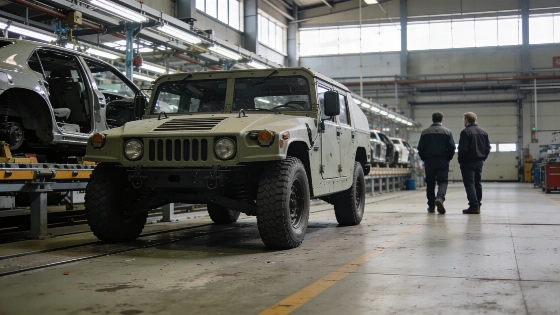
Seat has paused talks with Indra over a proposed military vehicle programme at its Martorell plant. The carmaker remains unsure how large the project could become, where it is headed and what it would mean for its business.
The proposed deal covered 5,000 light military vehicles at Seat's Martorell factory in Barcelona. Technical teams remain in contact, but Seat has not accepted a project that sources say currently offers more to Indra than to the carmaker. El País reported that the dispute went beyond signing a document: the larger question was whether the programme could become a lasting business for Seat.
Indra had prepared a memorandum of understanding for the production plan. The companies planned to sign it and announce the agreement on May 11 during a meeting with Catalan defence and space companies in Barcelona. Talks now focus on whether the project can work and grow.
Defensa.com reported that Indra's defence business grew by 36% in 2025, reaching €1.407 billion. Growth drivers included land systems and radars, alongside modernisation contracts.
That announcement never took place.
Sources familiar with the talks, who requested anonymity, said the two companies approached the project from different positions. Indra wanted a formal declaration of intent that would bind both sides. Seat was not convinced the programme could develop beyond the initial proposal or become large enough to support its business. The channels between the companies remain open, and the agreement could still be revived. For now, it remains a proposal under discussion, not a confirmed production programme.
The talks come as much of Spain's automotive industry examines a move into defence. Rising military spending in Europe has helped lead that interest, while Catalonia has a particular stake in the debate. The negotiations also fit into a wider Catalan industrial agenda covered earlier, although this dispute centres on factory capacity and corporate strategy. Defensa.com described the possible move as part of car companies' search for work on support platforms, as well as logistics or command systems.
El Confidencial reported that Indra is expanding its industrial footprint for land defence to more than 140,000 square metres. Planned and existing sites include facilities in As Pontes in A Coruña and Gijón. The company is building internal capacity alongside any possible partnership with Seat.
Indra's leadership changes have added another layer of uncertainty. Enric Blasco has led Indra in Catalonia since July. He is the basic executive on the technology company's side and is close to Ángel Simón, its current chairman. Simón replaced Ángel Escribano shortly before the planned announcement. José Vicente de los Mozos was still chief executive at that point.
Before Simón arrived, Indra's previous management held meetings with Markus Haupt, the chief executive of Seat and Cupra. De los Mozos attended at least one meeting. Seat acknowledged the meetings in March but called them institutional. About a week after the Barcelona event, Indra announced that De los Mozos would leave the chief executive role. Josep Maria Recasens was chosen as his replacement.
The company has since reshaped its executive committee. Five senior figures from the period under Escribano left the group: Manuel Escalante, Manuel Ausaverri, Antonio Mora, Juan Pedro Rodríguez and Miguel Ángel Panduro. Indra merged its defence and space operations into one business area led by Juan Ramón Hernández, previously Escribano's chief of staff. Frank Torres moved from the military vehicle division to become chief operating officer. His automotive career included leading the dismantling of Nissan Barcelona, completed in December 2021.
Indra is also reinforcing its position in existing land-defence programmes. In late September, TESS Defence announced delivery of its 100th Dragón 8x8 armoured vehicle to Spain's Ministry of Defence. Indra is part of the consortium. The company linked the programme in its announcement to Spain's national industrial base and greater operational autonomy for the armed forces.
Recasens is approaching defence for the first time after almost two decades in the car industry. He is preparing Indra's new strategic plan for the company's Capital Markets Day on November 25. The plan will replace Leading the future. That earlier plan included a proposed merger with Escribano Mechanical & Engineering. The operation was abandoned in March after tensions with the SEPI over possible conflicts of interest. The Escribano family later left Indra's shareholder base.
Seat is under pressure too. Volkswagen has announced 50,000 job cuts by 2030. It has also raised the possibility of closing four plants in Germany and cutting its product portfolio by 50 percent. The group has acknowledged that it cannot guarantee Seat's continuity beyond that date. Investment is focused on Cupra, which delivers higher margins.
Martorell has begun producing the Volkswagen ID. Polo and Cupra Raval electric models. The plant still needs replacements for the Seat Arona, León and Ibiza if Volkswagen ends those lines at the close of the decade. More than 470,000 vehicles were assembled there last year.
Against that backdrop, the stalled defence plan is more than a routine commercial delay. It shows the scale of the decision facing Seat. The carmaker first needs a programme that can work and expand. Until then, the military partnership remains an idea under discussion, not a new production pillar. Indra's defence activity and industrial base are growing, but its internal reorganisation and Seat's lack of a firm commitment leave the Martorell project unresolved.