Andy Burnham has dropped Labour's cautious Brexit formula. The British prime minister says every future relationship with the EU should remain open for discussion.
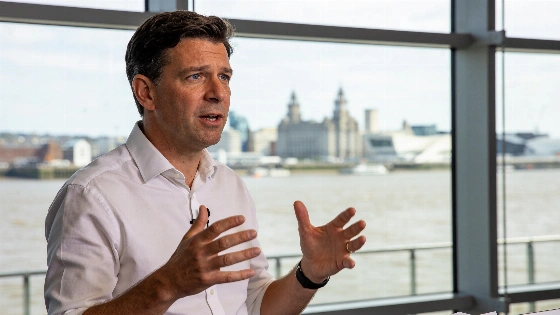
At Labour's annual conference in Liverpool, Prime Minister Andy Burnham said Britain could eventually consider returning to the European Union. The remark crossed one of Westminster's most guarded Brexit lines. It also breaks with the limits that shaped Labour's position since the Brexit debate began.
Burnham did not announce a plan to take Britain back into the EU. He removed that option from the list of subjects Labour would not discuss. In interviews with the BBC, he said his plan for the next decade would examine every available model. He named the current arrangement, closer cooperation, a customs union, a single market relationship and possible return to the EU.
Burnham did not call for an immediate referendum on EU membership, saying that such a vote would not be the right step at this stage.
His stated goal is a national consensus on Britain's long-term relationship with Brussels. The change matters because Keir Starmer's government had accepted the red lines linked to Theresa May's post-Brexit strategy. Britain would not rejoin the single market or the customs union. It would not restore free movement for EU citizens.
Burnham has now moved past the slogan Starmer used at the 2021 Labour conference: "Make Brexit work." That was the break.
In his first conference speech, Burnham said Brexit had caused more harm than benefit. He linked that judgment to Britain's economic performance and to the experience of millions of people who work with European citizens or spend time travelling and living in other European countries. The country, he argued, needs stronger growth and greater prosperity over the next decade.
Burnham also promised to set out possible options around an expected UK-EU summit later this year.
A Messina Group poll published in early October found that 49% of respondents supported Britain rejoining the EU, while 28.5% opposed it. The survey was conducted from 12 to 24 September among 11,461 people.
The prime minister used the language of Brexit against the people who first made it a political promise.
"Take back control" was one of the central arguments for leaving the EU. Burnham says Britain has lost some control over its economy after a decade of weak growth. He also says it has lost some control over immigration. His argument attacks both parts of that claim.
Nigel Farage now has an opening. The Reform UK leader says Burnham has given him the biggest boost of his career by reopening a divisive argument. The dispute could be especially sharp in the so-called red wall areas, where many traditional Labour voters supported leaving the EU.
Farage's advantage would come from forcing Labour to defend a debate the party had tried to contain. The fight has started.
The practical route back toward Europe will not be decided in Liverpool. Every option Burnham mentioned would require talks with Britain's European partners. A return to the EU would demand much more than a change in party language. Closer cooperation would also require agreement on the terms.
Emmanuel Macron and Pedro Sánchez welcomed Burnham's announcement during a press conference in Madrid. Macron replied in English with an invitation to come back. It was a short response, but it showed how two European leaders received the proposal.
Liverpool's Beatles references offer a ready political metaphor. Britain's post-Brexit debate has moved from "Let It Be" toward the possibility of "Come Together." The distance between those positions will be measured in negotiations, not music.
Burnham's move is bold because he rejects the idea that Brexit can be treated as a settled success. His own account points to weaker growth and unresolved immigration control. Britain has not changed its status. Labour has changed its position: no future relationship with the EU is automatically excluded.