José Trinidad Márquez, known as the Camaleón Criollo, was arrested in Madrid for attempting to defraud a businessman of 120000 euros. Despite over 20 cases against him, he was released with charges. His scams have targeted major companies for decades.
Madrid’s courts have released José Trinidad Márquez, better known as the Camaleón Criollo, after police caught him trying to swindle 120,000 euros from a local businessman. Even with more than 20 open cases against him in the city, the 72-year-old Venezuelan fraudster left court with only provisional charges. This has become a familiar pattern, frustrating both investigators and victims.
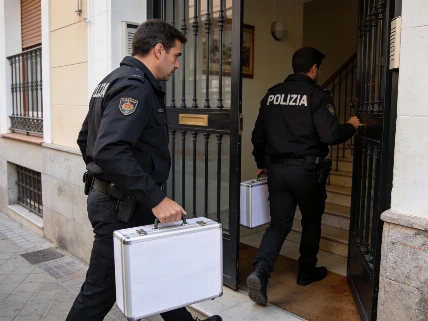
Márquez’s latest arrest happened in the Chamartín district. He posed as a Pemex executive, promising lucrative contracts. The intended victim, suspicious of his story, tipped off police before the meeting. Officers detained Márquez during the attempted handover, but he was released within two days after a brief court appearance. For economic crimes like this, suspects are often granted provisional liberty while awaiting trial.
According to ABC, Márquez is considered the most notorious and active scammer of his kind in Spain, with a criminal career spanning at least 35 years—longer than previously reported.
For more than thirty years, Márquez has built a reputation as Spain’s most persistent corporate impostor. His approach is straightforward: he contacts executives at industrial firms, claims to represent oil companies like PDVSA or Pemex, and offers access to rigged tenders for shipbuilding contracts. Meetings are set up in luxury hotels, complete with forged documents and a polished appearance—always in a suit, always with a convincing story. In 2024 alone, he targeted companies such as Samsung, Siemens, Mitsubishi, Rolls Royce, and Morgan Stanley, according to evidence reviewed by EL PAÍS.
Despite his long criminal record, Márquez has rarely spent time in prison. Judicial sources call him a "classic" of Madrid’s courts, with his name appearing in at least 20 separate proceedings at Plaza de Castilla by the end of last year. Convictions, however, are rare. The only confirmed jail time was about fifteen years ago, when he served a sentence in Estremera prison.
Spanish press reports that since 2021, Márquez has impersonated an executive of PMI Holdings Petróleo España, a Pemex subsidiary, arranging meetings with victims in late August 2026. Police were tipped off by a potential victim on August 31, leading to a planned sting operation in Chamartín.
The Camaleón Criollo’s scams have drawn plenty of media attention. Over the years, he has tried to deceive everyone from Portugal’s largest bank to a Partido Popular deputy and even the vice president of Real Madrid. In one case, he stole the identity documents of a Móstoles resident, Domingo Galán, using their physical resemblance to further his schemes. The Venezuelan outlet Armando.info gave him his nickname, comparing him to the main character in the film "Catch Me If You Can."
Márquez keeps his personal life as carefully managed as his scams. Last year, he was found living with his partner and their child in a Chamartín apartment, and he is often seen in the upscale Goya area of Salamanca. His ability to blend into Madrid’s business circles has let him operate with surprising freedom, even as his reputation grows.
While the Spanish justice system continues to process his many cases, the reality is that economic crime laws often favor provisional release over pre-trial detention. This legal framework, combined with Márquez’s knack for avoiding lasting consequences, means he is likely to keep trying. The situation echoes frustrations seen in other high-profile legal standoffs, such as those involving border tensions and political disputes reported earlier.
The persistence of the Camaleón Criollo highlights a weakness in Spain’s approach to white-collar crime. When someone with a decades-long record of deception can repeatedly walk free, it points not just to his skill but to the inertia of the institutions meant to stop him. Until the courts deliver a decisive verdict, Márquez’s story remains a warning for Spain’s business elite—and a reminder that for some, the risk of fraud is a constant reality.