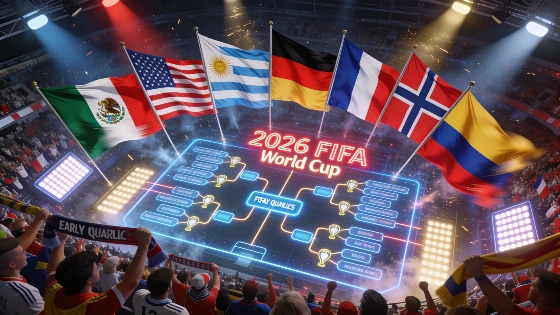
Seven national teams have already advanced to the 2026 World Cup's new Round of 32. The current standings reveal potential matchups, but group results remain in flux. Key leaders include Mexico, Germany, USA, and Argentina.
With the group stage of the 2026 FIFA World Cup only halfway through its second round of matches, seven teams have already clinched their places in the newly introduced Round of 32. Mexico, United States, Germany, Argentina, France, Norway, and Colombia have all secured early qualification, marking a significant shift in the tournament's structure and raising questions about how the knockout phase could unfold if the group stage ended today.
The current scenario, based on results up to Colombia's 1-0 victory over RD Congo on Tuesday, outlines a provisional bracket for the next round. According to the official FIFA system, the top two teams from each group, along with the eight best third-placed teams, would advance. The allocation of third-placed teams to specific matchups follows a probability-based model, with the current standings corresponding to scenario 246 out of 495 possible combinations.
Despite these early confirmations, the situation remains highly dynamic. Several groups still have two matches left to play, meaning that a single goal could dramatically alter the projected pairings. At this stage, only the group leaderships of Mexico, Germany, United States, and Argentina are guaranteed, while the rest of the field is still wide open. The unpredictability of the remaining fixtures ensures that no knockout matchup is officially set.
This evolving picture of the tournament's next phase has drawn attention from fans and analysts alike, especially as the expanded format introduces new strategic considerations for teams aiming to secure favorable positions. The inclusion of more third-placed teams adds complexity to the draw, making each remaining group match potentially decisive for qualification and seeding.
For context, the 2026 World Cup marks the first time the competition features a Round of 32, reflecting FIFA's broader expansion of the tournament. This change increases the number of matches and participating nations, intensifying competition for advancement. As seen in other major sporting events, such as the recent return of the Brno circuit to the MotoGP calendar, tournament format changes can significantly impact both strategy and outcomes—an effect now being closely watched in the football world. For more on how tournament structures influence competition, see this analysis of MotoGP's evolving schedule: how the Brno circuit's comeback affected MotoGP standings.
As the group stage continues, attention will remain fixed on the shifting landscape of potential knockout clashes. The final composition of the Round of 32 will only be determined once all group matches conclude, leaving teams and supporters to navigate a tense and unpredictable path toward the next phase of the World Cup.
According to FIFA's official guidelines, the expanded format is designed to accommodate more nations and increase global representation. The new structure means that even third-placed teams have a realistic chance of progressing, which could lead to more dramatic finishes in the final group matches. The 2026 tournament is being co-hosted by the United States, Mexico, and Canada, further highlighting the significance of early qualification for teams from these host nations.