Silvia Intxaurrondo takes legal action against RTVE after a major pay cut. The journalist seeks to restore her previous salary and secure a permanent position. Rumors link her to the new La Séptima channel.
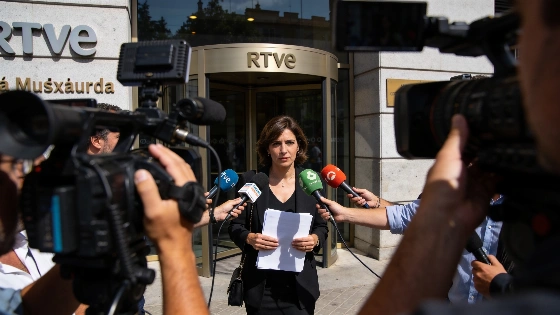
Silvia Intxaurrondo is at the center of a high-stakes legal dispute with RTVE, as the journalist appears in court this Thursday to contest a significant reduction in her annual salary and to demand recognition as an 'indefinida no fija' employee. The case has drawn attention not only for its financial implications—her pay reportedly dropped from €253,000 to €140,000 per year—but also for the uncertainty it creates around her future at the public broadcaster.
The conflict began when a labor inspection found irregularities in Intxaurrondo's contract, which was managed through her company, Sukun Comunicación. As a result, RTVE was required to bring her onto the official payroll. The broadcaster offered her an 'artista' contract to maintain her previous salary, but Intxaurrondo declined, arguing it did not comply with the labor authority's ruling. Ultimately, she was hired under the collective agreement, leading to a substantial pay cut despite additional bonuses for her role on the morning show.
While the legal battle unfolds, speculation is mounting about Intxaurrondo's next move. Her name has surfaced in discussions about La Séptima, a new nationwide TDT channel set to launch on November 5. The channel, led by Contreras, is reportedly seeking well-known personalities to anchor its programming. Despite Intxaurrondo's recent statements that she intends to return to 'La Hora de La 1' after her summer break, persistent rumors suggest a possible departure from RTVE, fueled by ongoing tensions with management at Prado del Rey.
The outcome of this court case could have a lasting impact on the landscape of Spanish morning television. If Intxaurrondo succeeds, it may set a precedent for how contract disputes are handled at public broadcasters. The situation also highlights broader issues of employment status and pay equity in Spain's media sector. For context, recent high-profile legal cases involving public figures and institutions have underscored the growing scrutiny of judicial independence in Spain, as seen when the former president of the Supreme Court raised concerns about political pressure on the judiciary. In Intxaurrondo's case, the intersection of legal, financial, and reputational stakes makes the proceedings especially significant for both RTVE and the wider industry.
RTVE, as Spain's national public broadcaster, has faced several contract-related controversies in recent years, reflecting the complex legal environment for high-profile media professionals. The 'indefinida no fija' status Intxaurrondo seeks is a form of job security that limits the employer's ability to terminate contracts without cause, a key issue for many in the sector. The launch of La Séptima adds another layer of competition to the Spanish television market, with established and emerging channels vying for top talent. As the court deliberates, the outcome will be closely watched by industry insiders and viewers alike, given its potential to reshape both individual careers and institutional practices.