The legendary Miura bulls delivered a tense, rapid encierro in Pamplona. Six people were injured, none by goring. The run highlighted both the danger and tradition of San Fermín’s penultimate day.
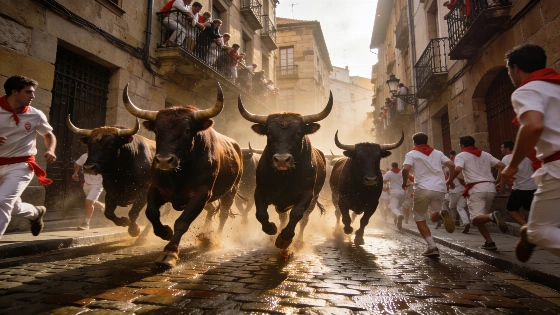
Six people were injured during the penultimate running of the bulls at San Fermín 2026, as the renowned Miura bulls charged through Pamplona’s streets in just over two and a half minutes. The event, marked by the presence of the legendary Lora del Río herd from Seville, unfolded with a sense of heightened risk as the massive animals—each weighing over 600 kilos—ran tightly packed, causing several falls and pile-ups among runners. Despite the intensity, none of the injuries were caused by goring, according to provisional medical reports.
The Miura bulls, a fixture of San Fermín for more than four decades, are known for their imposing size and unpredictable temperament. This year’s group included six bulls—"Merecido," "Mochuelo," "Gaditano," "Decoroso," "Famoso," and "Andaluz"—all exceeding 600 kilos and displaying a range of traditional Miura coat colors. The run began at 8:00 a.m., with hundreds of runners bracing themselves after the customary triple chant to San Fermín. The bulls reached the arena in a swift 2 minutes and 34 seconds, but delayed their entry into the pens after circling the ring, extending the overall duration.
Throughout the course, the compact herd maintained a relentless pace, with only one bull briefly lagging behind. The atmosphere was charged with tension as runners navigated the narrow streets, and several significant falls were reported. The event was broadcast live across multiple RTVE channels, offering viewers a choice of camera angles and comprehensive coverage, including special programming and multicamera streaming options.
Accessibility was also in focus this year, as the Asociación Retina de Navarra introduced a new viewing area for people with low vision, allowing them to experience the encierro from the edge of the ring for the first time. Organizers highlighted the importance of improving access for all participants and spectators, reflecting ongoing efforts to make the festival more inclusive.
Beyond the run itself, the day was marked by social and political undertones. A demonstration against sexual violence took place in Pamplona’s Plaza del Castillo, drawing hundreds of participants and coinciding with the tenth anniversary of the high-profile La Manada case. The protest, organized by the Movimiento Feminista de Iruñerria, underscored ongoing concerns about safety and respect during the festivities, with banners calling for an end to violence against women.
The Miura family, who have managed the herd since 1842, emphasized their deep connection to Pamplona and the festival’s traditions. The bulls’ distinctive appearance—large horns, muscular build, and a variety of coat colors—continues to captivate both locals and visitors. According to Antonio Miura, the animals are known to rise to the occasion in the ring, surprising even seasoned observers with their presence and energy.
San Fermín 2026 has been characterized by exceptionally fast runs, with most encierros clocking in between two and two and a half minutes. The festival, now nearing its conclusion, has seen a mix of skilled running and moments of real danger. For context, a previous encierro with La Palmosilla bulls also resulted in multiple injuries and highlighted the ongoing challenges of balancing tradition with safety—details of which can be found in this report on another recent San Fermín run.
San Fermín remains one of Spain’s most iconic festivals, blending centuries-old rituals with modern concerns about safety, accessibility, and social responsibility. As the final days approach, attention remains fixed on both the spectacle in the streets and the evolving conversation around the event’s place in contemporary Spanish life.