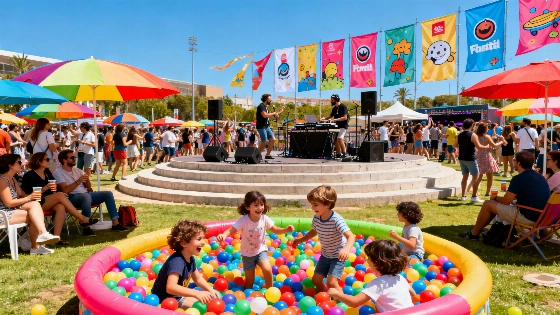
Families returned to Sónar Kids in Barcelona this weekend, with approximately 1,500 people attending at its new location, Parc del Fòrum. The sold-out event marked a impressive change for families after a six-year hiatus and recent changes to entry policies at the basic Sónar festival.
This year, Sónar Kids was held in the smaller amphitheater at Parc del Fòrum, which quickly filled with families seeking shade during an intense heatwave. Security staff were still bringing in umbrellas by midday, while natural ice pops sold out rapidly as attendees tried to cope with the high temperatures. The heat was part of an exceptional episode across Spain: Reuters reported that mainland Spain recorded its highest June daily average temperatures since at least 1950, with averages of 28.08°C and 28.17°C on consecutive days. The report also cited 212 heat-related deaths in Spain from Sunday through Wednesday, information from a public institute. Those national figures put the challenges of hosting outdoor events in extreme weather in broader context.
The festival's return comes as Sónar's basic event has moved to a single site at Fira Gran Via in L’Hospitalet, bringing its daytime and nighttime programming together. Under the current admission policy, the basic event is restricted to adults, whether or not a minor is accompanied. Sónar Kids is a separate event with separate tickets for children. Previously, children could attend the festival at Plaça Espanya if accompanied by adults. In response, Sónar Kids offered three distinct zones: SónarXS hosted live performances and DJ sets, while SónarDôme offered hands-on workshops; a play area featured a ball pit and oversized games. The dance floor had water misters and sunscreen dispensers, and DJs like La Sofy kept the crowd moving to cumbia rhythms and popular tracks.
For many, Sónar Kids is a family tradition. One attendee, a long-time Sónar fan, brought her young nephew to experience the event, which she said fosters creativity and shared experiences across generations. Some families planned to continue the celebration at the basic Sónar event later in the evening, a sign of the festival's enduring appeal.
Organizers said Sónar Kids is not designed to make a profit; its aim is to make the Sónar experience accessible to families. Children under 15 entered free, while adults paid a modest fee. The festival's communication chief said Barcelona needs to maintain its reputation as a hub for music and creativity as generational shifts bring new audiences. Some children who once attended Sónar Kids are now old enough to join the basic festival on their own, while veteran fans return with their families.
The event also featured established artists from the local electronic scene. AWWZ, a Barcelona-based DJ who has played at eight previous Sónar editions, closed the Sónar Kids program with a set tailored to younger listeners. She spoke about involving her own child in the preparation and choosing tracks that resonated with her audience and her family.
Sónar Kids' return reflects how music festivals in Spain are adapting, with safety and inclusivity basic to the event alongside generational continuity. Its response to the basic festival's adults-only admission policy and its focus on family participation echo broader shifts in the cultural sector. Founded in 1994, Sónar remains one of Barcelona's most influential music festivals, with a legacy of innovation and community engagement. Its ability to adapt to changing audience needs continues to shape its place in the city's cultural calendar.