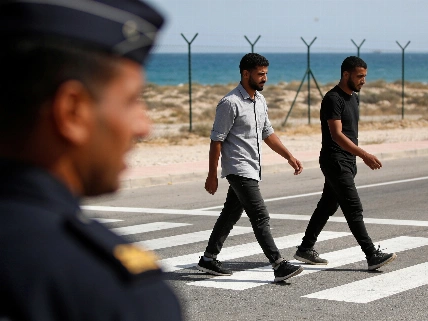
The Spanish government has approved €25 million to support unaccompanied minors in Ceuta. The move follows a sharp increase in irregular crossings from Morocco. Authorities confirm 75 deaths linked to the crisis.
Spain has announced an emergency allocation of €25 million to address the needs of unaccompanied migrant minors in Ceuta, following a surge in irregular border crossings from Morocco last week. The decision comes as local authorities report that around 1,000 foreign minors are currently under the care of the autonomous city, with the true number potentially higher due to ongoing arrivals and incomplete registration.
Interior Minister Fernando Grande-Marlaska, after a special videoconference with his EU counterparts, stated that Spain's rapid response and the efforts of its authorities have been recognized at the European level. He emphasized that the Schengen Area's integrity was never at risk during the crisis. Marlaska also updated the figures, noting that 72,000 migrants crossed from Morocco irregularly, with 70,000 already returned to their country of origin. He stressed that no prior report had predicted an event of this scale, referencing the unexpected nature of the 2021 incident.
The government delegation in Ceuta confirmed the discovery of three more bodies since Monday, bringing the total number of deaths related to the recent mass entry to 75. The Guardia Civil has set up a dedicated office and email address in Ceuta to collect reports of missing migrants, as families seek information about loved ones who attempted the crossing.
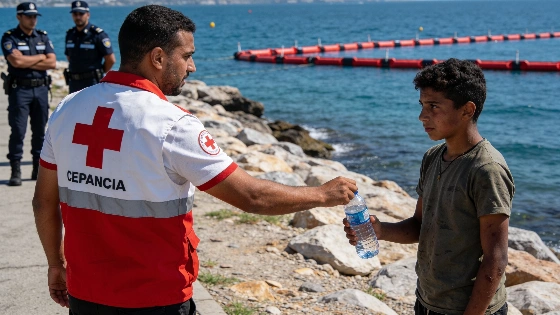
Minister of Inclusion, Social Security and Migration, Elma Saiz, clarified that the new €25 million package is in addition to the €5.5 million previously transferred to Ceuta in July, as part of a broader €35 million national distribution for child welfare. However, she did not specify the exact number of minors currently being assisted. The city continues to face logistical challenges, with emergency food distribution coordinated by the Banco de Alimentos de Ceuta, which has been providing basic supplies such as water, milk, biscuits, and ready meals since the crisis began.
In response to the influx, Spain has installed a floating barrier off Ceuta’s coast to deter further crossings. The barrier sustained damage on Monday but was repaired by Tuesday morning. Similar maritime containment measures are being considered for Melilla, tailored to local conditions. Meanwhile, Defence Minister Margarita Robles is set to meet with the commanders of Ceuta and Melilla to discuss territorial security and sovereignty.
Despite the ongoing emergency, Ceuta’s government has decided to proceed with the annual festivities honoring the Virgen de África on August 4 and 5, maintaining a sense of normalcy amid the exceptional situation. For further background on the funding and the scale of the challenge facing Ceuta, see this analysis of the government's emergency support for unaccompanied minors: Spanish government boosts aid for migrant children in Ceuta.
Ceuta and Melilla, Spain’s two enclaves on the North African coast, have long been focal points for migration from Africa to Europe. The recent crisis highlights the ongoing pressures on border management and humanitarian support in these territories. The Spanish government’s response, combining emergency funding, border infrastructure, and coordination with European partners, reflects the complexity of balancing security, legal obligations, and the protection of vulnerable groups. The situation remains fluid, with authorities monitoring developments and adapting measures as needed.