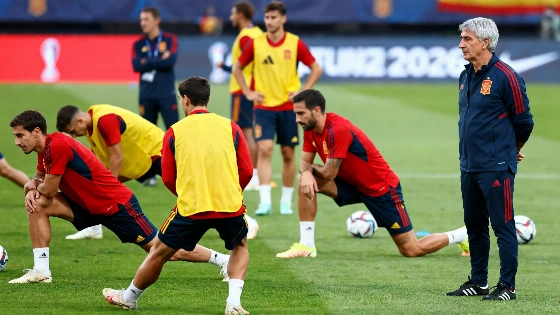
Spain National Team Prepares Squad for 2026 World Cup: Who Will de la Fuente Choose. Five days before Spain announces its squad for the 2026 World Cup, the head coach spoke about the selection criteria, playing philosophy, and tough decisions ahead. Key topics include competition within the team, the role of leaders, and expectations for the tournament.
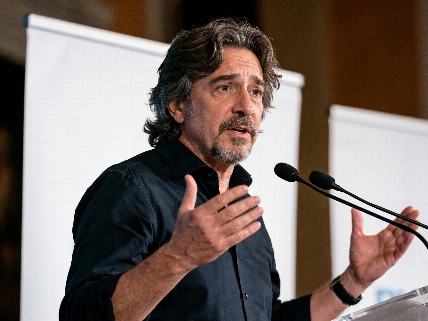
Spain is finalizing preparations to announce the national team squad for the 2026 FIFA World Cup. Head coach Luis de la Fuente has already chosen a list of 26 players who will travel to the tournament in the USA, Mexico, and Canada. According to him, the decisions regarding the squad were made in advance, and both the playing model and tactical principles have been established.
De la Fuente noted that the final list may feature new names who have not previously been called up to the senior team. The coach also emphasized that there will be three goalkeepers, despite a desire to take more—competition for this position remains intense. Important selection criteria included not only playing ability, but also players’ personal qualities: the coach will not tolerate a lack of respect or team spirit in the squad.
In an interview with the podcast ‘El camino de Mario’, de la Fuente spoke about the behind-the-scenes work of the coaching staff: every week, specialists watch up to 60 matches and analyze the performances of both their own players and opponents. Preparation for the tournament takes months, and during the club season, the coaches do not interfere with players’ work, focusing instead on planning training camps and analyzing data.
Particular attention is paid to the atmosphere within the group. According to the coach, after the success at the Euros, the concept of “family” became entrenched in the team—the players spend a lot of time together, which strengthens their unity. De la Fuente believes that it is precisely this unity and mutual support that have been key factors in the development of the national team.
Among the difficult decisions, the coach highlighted the refusal to invite Sergio Ramos, despite his status as a legend of Spanish football. De la Fuente admitted that such steps are not easy, but insists that decisions are made solely in the interests of the team. He also noted that he does not allow outside factors to influence his choices and tries to avoid external pressure.
From a tactical perspective, the Spanish national team will continue to use the 4-2-3-1 formation, focusing on wing play and a strong central line. The coach emphasizes that modern football requires not only possession control, but also the ability to transition quickly from attack to defense. According to him, the team has become more versatile and is ready for different match scenarios.
The goalkeeping lineup remains one of the team's strongest assets: de la Fuente is confident in each of the selected candidates, although he acknowledges that some players, such as David Raya, are underestimated in the public sphere. The coach has almost finalized the main squad, but does not rule out that certain players may not feature in the opening matches—a situation that already occurred with Dani Olmo at the Euros.
Among the leaders and experienced players highlighted are Rodrigo, Merino, Oyarzabal, Ferran, and Dani Olmo. Gavi holds a special place, having returned to a high level after serious injuries and, according to the coach, earned his spot in the team solely due to his own efforts.
De la Fuente does not plan to leave the national team after the World Cup and calls the upcoming tournament historic: for the first time, 48 teams will participate, and the conditions will be unusual. Among the favorites, he highlights France, Brazil, Argentina, Portugal, England, Senegal, Morocco, and Spain, emphasizing that they all have similar chances of success.
The coach also drew attention to the trend of Spanish players going abroad and expressed regret that footballers such as Fabián, Zubimendi, and Merino are forced to seek playing opportunities outside La Liga. In his opinion, the national championship should remain the priority for the country's leading players.
In the context of preparing for the tournament and forming the Spanish national team roster, it is worth noting that there is an ongoing active discussion in the country about the role of sports and national identity. For example, major events recently took place in Galicia dedicated to the language and memory of writer Begoña Caamaño, highlighting the importance of cultural and public initiatives for national unity — you can read more about this in the article on mass events in Galicia.
For reference: the 2026 World Cup will be held for the first time across three countries — the USA, Mexico, and Canada. The tournament will feature 48 teams, expanding opportunities for new squads and increasing competition. Spain is traditionally among the favorites, and its achievements in youth and junior categories are considered some of the strongest in Europe. Issues of selection, tactics, and internal team dynamics remain at the center of attention for fans and experts alike.