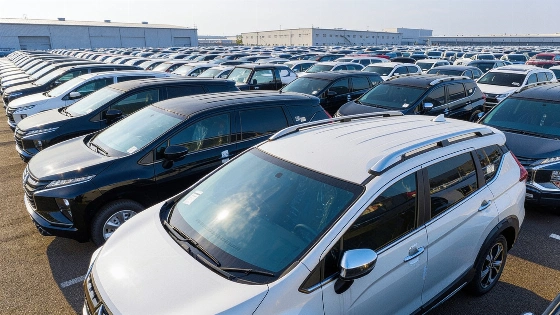
Over 55,000 used cars landed in Spain in just three months of 2026. Most arrived with no way to check their real mileage, leaving buyers open to odometer scams and hidden wear.
A ten-year-old German sedan showed up for sale in Valencia with 87,000 kilometers on the clock. The paperwork looked fine. The plates were Spanish. The odometer reading seemed low. But the new owner had no idea the car had already run 164,000 kilometers in Germany just a year before. That missing 77,000 kilometers meant the buyer paid thousands too much and faced a real risk of costly repairs down the line.
This story is not rare. From January to March 2026, Spain brought in 55,241 used cars from abroad, according to the Dirección General de Tráfico. That’s almost 11% of all new registrations in those three months. Dig deeper and the pattern gets worse: these imports averaged 10.5 years old, and more than 20% had already spent over fifteen years on foreign roads before coming to Spain.
According to CARFAX data cited by Spanish media, 56% of used cars changing owners in Spain in the first half of 2026 had at least one risk factor, and the average mileage of imported vehicles reached 192,888 kilometers.
Germany sends the most cars—44% of the total—usually newer models with better equipment that meet Euro 6 rules. France is next, but its exports are older and many don’t even qualify for that environmental class. Belgium, the Netherlands, and Italy fill out most of the rest. The process is easy because 86.6% of these cars come from inside the European Economic Area. That makes registration simple, but it also means almost nobody checks the original mileage against what’s shown in Spain.
Coral Sevillano, deputy director of vehicles at the DGT, points out the trade-off: importing a Euro 5 car can be a step up if it replaces a worn-out Spanish model from 2005. But it also keeps buyers from getting a new car with the latest safety tech now required by Brussels. The bigger problem? Neither Sevillano nor anyone at the DGT can say how many imported cars come with a real service history. Spain has no system to check this data at all.
The problem stretches across Europe. Every year, 60 million used cars change hands in the EU. In January 2025, a parliamentary question to the European Commission cited estimates that 5% to 12% of used cars sold within a single country have tampered odometers. For cross-border sales, the rate jumps to 30% to 50%, depending on the source and trade route.
Spanish media, referencing DGT and sector studies, report that among checked used cars in Spain, 39% showed signs of previous accidents, 13% were ex-rental, 10% were imported, and 2% had mileage discrepancies. The DGT collects odometer readings from ITV inspections since 2013, but lacks a mechanism to verify the full service history of imported vehicles at registration.
Spain, Italy, and several Eastern European countries are often named as places where odometer fraud is barely pursued. Belgium’s Car-Pass and the Dutch Nationale Auto Pas keep every odometer reading in a national database that buyers can check. Fraud in those countries is almost wiped out. Spain, on the other hand, only records mileage at mandatory inspections every two years, and the first check isn’t needed until four years after registration.
Data from vinnumber.net, a vehicle check platform, shows a big gap between the first official mileage reading and the moment an imported car is sold in Spain. Any tampering done before the car crosses the border disappears from Spanish records. Their numbers come from their own user checks, so it’s not a full sample, but the trend is clear.
Odometer fraud costs European buyers about 5.3 billion euros a year. In Spain, verification platforms find tampering in about 3.25% of cars they check. Across Europe, buyers pay about 21% too much for a car with a rolled-back odometer. Expensive cars in the 40,000 to 45,000 euro range are targeted for bigger profits, but the highest fraud rate—about 7.5%—hits cars sold for less than 5,000 euros, where paperwork is often missing or incomplete.
Criminal groups have turned these loopholes into a business. Operation Nimmersatt, run by the European Public Prosecutor’s Office with Europol, broke up a network that bought wrecked cars from US insurers, brought them into the EU through shell companies in Bulgaria, Estonia, Hungary, Latvia, Lithuania, the Netherlands, and Romania, fixed them up, and sold them as accident-free. The Lithuanian group alone moved at least 16,500 cars worth 144 million euros, dodging at least 31 million euros in taxes and VAT. The real losers are buyers who end up with unsafe cars dressed up as good deals.
Spain was one of twelve countries with open cases in this operation. In April 2026, the Berlin regional court got the first charges against three traders, accused of running a criminal group and helping with VAT fraud worth about 15 million euros.
In April 2025, the European Commission put forward reforms that would force every EU country to set up a national odometer database like Belgium and the Netherlands. The plan also calls for digital registration and inspection certificates, cross-border data sharing, and real steps to stop odometer tampering. EU transport ministers agreed on the basics in December 2025. By April 2026, the European Parliament had started talks to finish the law.
But for now, Spain keeps registering tens of thousands of used imports every quarter. Most come with mileage histories that Spanish authorities can’t check or challenge. Without a strong national database, buyers are left exposed and fraud is almost impossible to spot after the sale.
For comparison, the Spanish government recently bought new unmarked cars for police, as reported earlier. That shows when there’s political will, upgrades can happen fast. But in the used car market, rules lag behind and buyers pay the price.
The facts are clear: without a public, reliable record of a car’s real mileage, Spain stays an easy target for odometer fraud. Until the EU reforms become law and Spain builds a real-time, tamper-proof mileage database, every used car import is a gamble. The trust in the market—and the safety of Spanish roads—depends on closing this loophole for good.