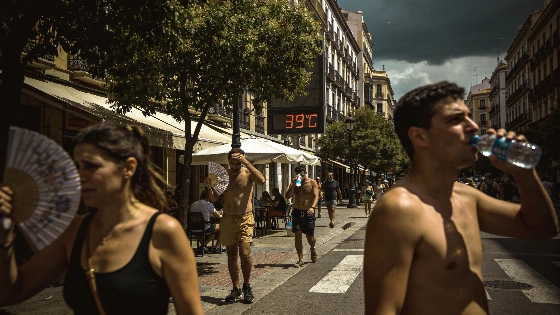
All Spanish regions face official warnings for dangerous heat, heavy rain or storms. Temperatures are set to exceed 35°C, with some areas nearing 40°C. Authorities highlight risks of hail and strong winds.
Spain is under a nationwide weather alert as every autonomous community activates warnings for either extreme heat, intense rainfall or severe storms. According to the Agencia Estatal de Meteorología, the alerts reflect a rare convergence of high temperatures and volatile weather, with several regions bracing for conditions that could disrupt daily life and pose safety risks.
Heat warnings are in effect across much of the country, including Andalucía, Aragón, Baleares, Castilla y León, Castilla-La Mancha, Cataluña, Extremadura, Galicia, Madrid, Murcia, Navarra, La Rioja, Comunitat Valenciana and Canarias. In these areas, temperatures are expected to surpass 35°C, with many localities forecast to approach or reach 40°C. The most critical heat alerts—orange level—are concentrated in Andalucía, Aragón, Castilla-La Mancha, Cataluña and Madrid, where the risk is considered significant.
In Andalucía, the orange alert focuses on the Córdoba countryside, the Morena and Condado areas of Jaén, the Guadalquivir Valley in Jaén, and the Sevilla countryside. All are expected to see temperatures at or near 40°C. Aragón will see its highest readings in the Pyrenees of Huesca, central and southern Huesca province, and the Cinco Villas area of Zaragoza, with peaks up to 39°C. Madrid’s metropolitan area, the Henares corridor, and the southern, Vegas and western zones are also under orange alert, with forecasts up to 39°C.
Storm and rain warnings are also widespread. Andalucía, Aragón, Asturias, Cantabria, Castilla y León, Castilla-La Mancha, Cataluña, Murcia, Navarra, País Vasco, La Rioja and Comunitat Valenciana are all on alert for heavy downpours and thunderstorms, often accompanied by hail and strong gusts. The most intense rainfall is expected in the Cuenca mountains, the Albarracín, Jiloca, Gúdar and Maestrazgo areas of Teruel, and inland Valencia province, where hourly accumulations could reach 30–40 liters per square meter. Orange-level rain alerts are in place for large parts of Castilla-La Mancha, Aragón and Comunidad Valenciana.
In Cataluña, the highest temperatures—up to 40°C—are forecast for the central depressions of Tarragona and Barcelona, as well as Lleida, the pre-coastal areas of Girona and Barcelona, and the Ampurdán region. The rest of the peninsula and Baleares are under yellow alerts for heat, rain or storms, indicating a lower but still notable risk. Gran Canaria also faces a yellow alert for heat, particularly in the highlands and the eastern, southern and western parts of the island.
Recent weeks have seen similar weather extremes in Spain, with emergency services responding to violent storms and record winds in the Valencia region. For example, powerful storms in Alcoi and Villena led to significant disruptions and emergency interventions, highlighting the ongoing vulnerability of many areas to sudden weather shifts.
Spain’s alert system uses a color-coded scale: yellow for low risk, orange for significant risk, and red for extreme danger. Orange alerts, now active in several regions, signal a need for heightened caution, especially for vulnerable populations such as the elderly, children, and those with health conditions. The combination of high temperatures and sudden storms can strain infrastructure, disrupt transport, and increase the risk of localized flooding or heat-related health incidents. Residents are advised to follow official guidance, stay hydrated, and avoid unnecessary travel during peak alert periods. The current situation underscores the growing impact of extreme weather patterns across the Iberian Peninsula, a trend that has become more pronounced in recent years.