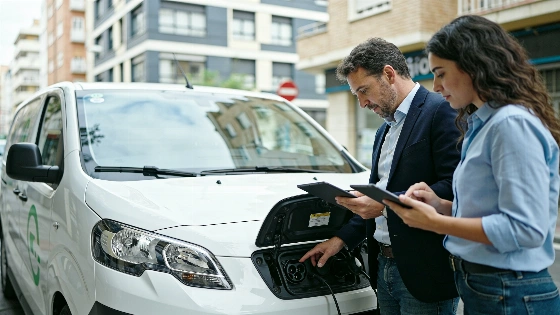
Spain is rolling out a powerful subsidy program to accelerate electric vehicle adoption among businesses and self-employed workers. The Plan Auto+ Line 2 offers up to €7,500 per van and strict eligibility rules, aiming to reshape the national transport landscape.
Spain’s government has set a clear target: get more electric vans on the road. The new Plan Auto+ Line 2, now published in the Boletín Oficial del Estado, puts businesses and self-employed workers at the center of this push. The plan is strict, the money is real, and the clock is ticking.
This time, not everyone can join. Only companies with legal status and self-employed people listed in the tax census are allowed to apply. They must be up to date with all tax payments. Car dealerships and sales outlets are out. The rules block bulk buying for resale. For those who qualify, the limits are set: up to three vehicles for each self-employed applicant, and up to ten for companies. Applications open at 10:00 on 1 October 2026. The window closes at 14:00 on 31 December 2026. Miss it, and you’re out.
The total budget for Line 2 is €50 million, with €42 million allocated for companies and €8 million specifically reserved for self-employed and microenterprises.
This move comes as Spain faces pressure from the Middle East crisis. But the government wants more than just a quick fix. The plan aims to boost local electric vehicle production, make electric vans easier to get, and keep Spain on track with global climate goals. Officials see Plan Auto+ Line 2 as a tool to speed up the shift away from combustion engines. It’s about money and policy, not just one or the other.
For microenterprises and self-employed workers, the offer is big. Each electric van can get up to €7,500. Other vehicles get between €4,500 and €5,000, depending on their specs. Leasing and renting count too, as long as the contract lasts at least three years. There’s a bonus for early movers: the scheme covers vehicles registered from 1 January 2026. That’s rare.
The rules are tight. Passenger cars (M1) with up to seven seats can’t cost more than €45,000 before tax. Vans with eight or nine seats don’t have this cap. Motorcycles are limited to €10,000. Anyone who gets a grant must keep the vehicle registered in Spain and in their name for at least two years. This stops quick resales and keeps the focus on real decarbonization.
According to several independent industry sources, the program is strictly limited to vehicles classified as zero-emission by the DGT, meaning only fully electric vehicles are eligible. This focus is intended to maximize the environmental impact and avoid diluting funds across a broader range of electrified models.
All applications must go through the Ministry of Industry and Tourism’s online system. No paper. No workarounds. Digital-only. This could be tough for small businesses without strong IT setups. But it also makes fraud harder and oversight easier.
Plan Auto+ Line 2 is just one part of a bigger push. It fits into the Plan España Auto 2030, which aims to grow the share of electric and plug-in hybrid vehicles and keep Spain’s car industry strong in Europe. The government calls this a key tool for hitting the Sustainable Development Goals in the 2030 Agenda. It’s about jobs and the environment, side by side.
Spain’s path is different from what’s happening elsewhere. As reported earlier, the United States has relaxed its electric vehicle rules and is turning back to combustion engines. Madrid is going the other way. The Spanish government is betting that strict rules and real money will get results.
The dates are set. The rules are public. Now it’s up to Spanish businesses to decide if they’re ready to go electric at scale. The government has made it clear: only real investment gets support. If Plan Auto+ Line 2 works, Spain’s transport sector could change for good. The stakes are high.