The Spanish government is prioritising family reunification for migrant minors stranded in Ceuta. Over 1,400 young people remain in limbo as local capacity is exceeded. Security and support measures are being urgently reinforced.
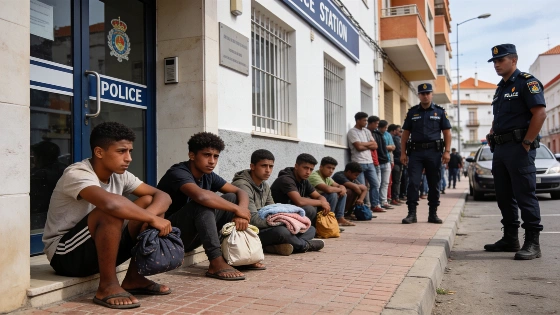
The Spanish government has announced that reuniting unaccompanied migrant minors with their families will be its main response to the escalating crisis in Ceuta. Hundreds of minors who swam into the city from Morocco at the end of July now wait outside the local police headquarters, hoping to register and find shelter. With official facilities able to accommodate just 29 minors, the city is facing a severe overflow, as the number of registered young migrants has reached approximately 1,400, according to the Minister of Política Territorial, Ángel Víctor Torres.
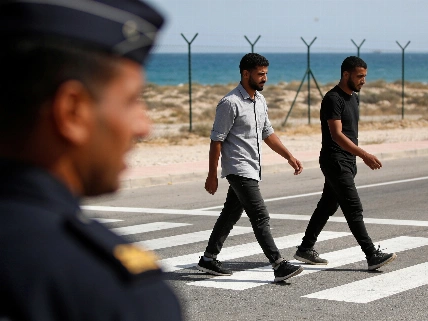
During his visit to Ceuta, Torres met with the city’s president, Juan Jesús Vivas, and acknowledged the scale of the emergency. He noted that the true number of minors remains uncertain, as many continue to sleep rough near police buildings. The minister also estimated that around 80,000 people entered Ceuta irregularly from Morocco during the recent surge, warning that without the return of most adults, the city would have faced total collapse.
In response, the government is focusing on family reunification as the primary solution to what Torres described as a “migration contingency.” He stressed that the process is complex, requiring cooperation from Moroccan authorities, the minors themselves, and their families. The aim is either to return the children to their country of origin or transfer them to other regions of Spain, but each case depends on multiple factors and the willingness of all parties involved.
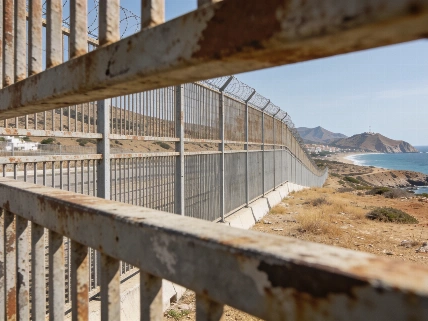
The situation in Ceuta has triggered widespread local frustration. Just hours before Torres’s visit, the city saw one of its largest protests in recent memory, with residents demanding urgent action from both the Spanish government and European institutions. Demonstrators called for immediate support, more resources, and reinforced border controls. The protest also included calls for the resignation of the government delegate in Ceuta and vocal backing for the city’s president. Many locals say they feel abandoned by national authorities.
To address the mounting pressure, Torres announced a 50% increase in staff at the Government Delegation to speed up administrative processes. Security forces are also being reinforced, with a 40% rise in Guardia Civil personnel and nearly 30% more National Police and military deployed. Authorities are searching for additional spaces to house the minors, including the possible use of the former military hospital, though this option is still under review pending health and safety checks.
Ceuta’s struggle to protect vulnerable minors has been ongoing. In recent weeks, local women have stepped in to shelter migrant girls amid reports of sexual violence, as highlighted in coverage of the challenges facing unprotected migrant girls in Ceuta. The current focus on family reunification marks a shift in government strategy, aiming to relieve pressure on local services and address the humanitarian needs of the children.
Spain’s approach to unaccompanied minors is shaped by both national and international obligations. Under Spanish law, authorities must guarantee the protection and care of all minors found on national territory, regardless of their migration status. The recent events in Ceuta have exposed the limits of local capacity and the urgent need for coordinated action between Spain and Morocco. The government’s decision to prioritise family reunification reflects both the scale of the challenge and the complexities involved in managing cross-border migration flows. As the situation evolves, the effectiveness of these measures will be closely watched by both local residents and international observers.