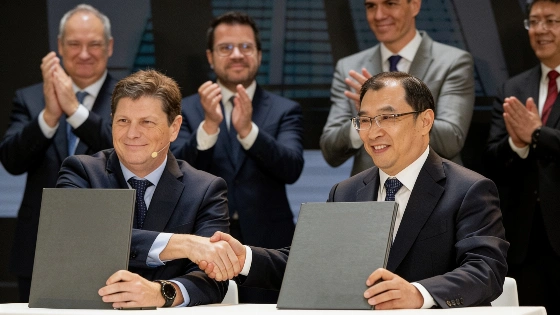
Spain is setting up a fast track for Chinese firms, hoping to fill the gap as US and UK money dries up. The government will now handle all major investment approvals from Moncloa, promising faster decisions for big projects.
Spain’s government is giving Chinese companies a direct way into the country’s economy. The plan is to speed up approvals for major investments, just as money from the United States and United Kingdom is pulling back. Madrid is shifting its foreign investment strategy. Moncloa will now handle all key decisions, cutting out the layers of bureaucracy that have frustrated foreign investors for years.
The new fast track sits with the Committee of Foreign Investments. Its job is to speed up permits and bring together the maze of authorizations that used to run through local and regional offices. Now, the prime minister’s economic office and the Ministry of Economy will have almost all the power to approve or block billion-euro projects. For companies looking to enter Spain, the message is simple: win over Moncloa, and the rest falls into place.
According to Registro de Inversiones Extranjeras (Datainvex), Spain attracted 12.446 billion euros in gross foreign direct investment in the first half of 2026, a 31.2% increase over the previous year, with the US accounting for 23% of the total and boosting its investment by 84%.
This overhaul comes as Spain’s usual investment partners are pulling out. In the first half of the year, foreign divestment jumped to 9,038 million euros. That’s three times last year’s figure and the highest since 2018. Most of this capital flight comes from the UK and US, with each country’s companies pulling more than 3,800 million euros. Even though the US made up 23% of gross investment, its net contribution is now negative, as is the UK’s. Spanish economic publications point out that this gap between gross and net flows shows how complicated the investment picture has become.
Chinese investment is still small—just 2% of the total in 2025. The government wants to change that. Big announcements from Chery, BAIC, SAIC, CATL, Envision, Hithium, and Hygreen Energy have made headlines, but real Chinese capital inflows are still low: only 55 million euros in the first half of the year, with almost no divestment. Over the last decade, Chinese companies have put 7,611 million euros into Spain, but last year’s total was just 675.9 million. Reports from Spain’s Ministry of Economy say the new fast track aims to fix these low numbers by cutting approval times for major projects to about six months.
For Beijing, Spain now looks like a rare safe spot in the European Union. Once inside Spain, Chinese firms can avoid EU tariffs—especially on electric vehicles—and use Spain as a base to reach the rest of Europe, where rules are getting tougher. The government’s new approach answers complaints from Chinese investors about Spain’s slow bureaucracy and long waits for permits, which have often stalled or blocked big projects.
Spain has become one of the top destinations in the EU for new foreign investment projects in 2026, ranking fourth globally by number of new projects in the first seven months of the year, according to fDi Markets. This reflects a broader trend of growing international interest in Spain, not limited to Chinese capital.
Madrid’s push to welcome Chinese capital is stirring debate. The European Commission has warned about the risks of closer economic ties with China, pointing to the growing trade deficit and possible threats to Europe’s control over key technology and industries. Brussels is tightening rules on cybersecurity and public contracts to protect European firms from outside competition, especially from countries outside NATO. Spain’s move is now seen as a challenge to EU unity and policy direction.
At the same time, the government is keeping its anti-takeover shield for another year, widening it to cover more sectors and aiming to make EU company controls permanent. But the new fast track for foreign investment goes further. It takes away the veto power of local and regional authorities, putting decisions in the hands of the central government. This centralization has made some in the business world uneasy. There are worries that being close to Moncloa could become the key to getting big deals approved.
Despite the government’s upbeat tone, the numbers show a gap between promises and reality. Chinese firms have pledged nearly 7,900 million euros in five mega-projects over the last two years, but much of this money is still tied up in the pipeline. The hope is that the new fast track will finally unlock these deals and bring in new capital, just as Spain’s old allies are heading out.
Spain’s turn toward China matches bigger changes in European trade. In Galicia, for example, imports from Asia have now passed those from the Americas. The government is betting that by making Spain the EU’s easiest entry point for Chinese capital, it can make up for the loss of US and UK investors and find a new driver for growth.
But this strategy comes with risks. By centralizing power and favoring one group of investors, Spain could find itself at odds with both Brussels and Washington. The next few months will show if Moncloa’s bet on Chinese money pays off—or leaves Spain open to new problems in a changing world.