Spanish health officials have recalled five types of barbecue and chimichurri sauces sold under the Dumt’s and Vulpi brands after undeclared gluten was found in multiple batches. The alert now affects eight autonomous communities, and consumers with gluten intolerance are urged to check batch numbers before using these products.
Spanish consumers are being urged to check bottles of Dumt’s and Vulpi sauces after five barbecue and chimichurri products were recalled across eight autonomous communities because of undeclared gluten. The recall began with three products and now includes two additional large-format bottles and more batches. People with celiac disease or gluten sensitivity could be at risk if they eat the sauces.
The Agencia Española de Seguridad Alimentaria y Nutrición (AESAN) updated its warning on 11 September 2026, expanding the number of affected products and regions. The issue initially involved Andalucía and Madrid; it now includes Aragón, Castilla-La Mancha, Castilla y León, Cataluña, Comunitat Valenciana, and Galicia. AESAN stressed that where the sauce was bought does not matter. Consumers should check the batch code on the bottle at home.
The AESAN warning now covers a total of 21 batches across the Dumt’s and Vulpi brands, pointing to a broader production issue than initially suspected.
For people who rely on gluten-free labels, this recall is especially worrying. Spanish and EU law allow a product to be labeled “sin gluten” if it contains no more than 20 milligrams of gluten per kilogram. AESAN has not said how much gluten was found in these batches, leaving consumers without details of the actual risk. The advice is clear: anyone with gluten-related health issues should avoid these products, regardless of what the label says.
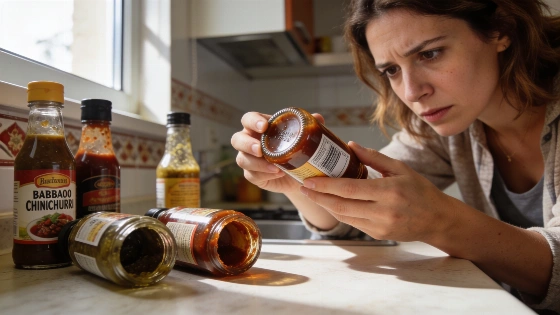
To identify the recalled sauces, consumers need to check the brand, type of sauce, packaging size, and especially the batch number. For example, batch code L2510281105 appears on both Dumt’s Barbacoa 1,020 grams and Vulpi Barbacoa 600 grams, which could cause confusion. Some bottles have best-before dates as late as March 2027, but the recall applies to the batch number, not the expiry date.
The full list of affected products includes: Dumt’s Barbacoa (1,020g, batches L2510281105 and L2601200123), Dumt’s Barbacoa (225g, batches L251203B1223 and L251203B1209), Vulpi Barbacoa (600g, batches L2510221028, L2510221029, L2510221030, L2510221031, L2510221032, L2509291007, L2510281105, L251203A1205), Vulpi Chimichurri (210g, batches L2509160918, L2509160919, L2509160920, L2509160921, L2509160922, L2509160923, L2509160924, L2512111217, L2512171223, L2601280209), and Vulpi Chimichurri (1,080g, batch L2601280130).
Reports from EFE and Infobae say the recall affects products distributed in eight autonomous communities: Andalucía, Aragón, Castilla-La Mancha, Castilla y León, Cataluña, Comunitat Valenciana, Galicia, and Madrid. The expanded alert shows the scale of the issue and why consumers should check batch numbers, regardless of where they bought the product.
Source: EFE/Infobae
Anyone who has these sauces at home should set them aside and not eat them. AESAN recommends contacting the retailer about returns and providing the brand, format, and batch number. Keeping the packaging or a clear photo of the label can help. If symptoms appear after eating the sauce, seek medical advice right away.
AESAN says stores began withdrawing the products as soon as the first alert was issued. Regional authorities are coordinating through the Rapid Information Exchange System to remove the products from shops, but that does not guarantee all bottles already sold have been found. Consumers should check their own kitchens.
The recall shows how people who trust “sin gluten” labels can still be exposed when manufacturing controls fail. The lack of information about actual gluten levels in the recalled batches adds to the uncertainty. Until food safety agencies require stricter controls and full disclosure from manufacturers, people with celiac disease or gluten intolerance must rely on their own vigilance at home.