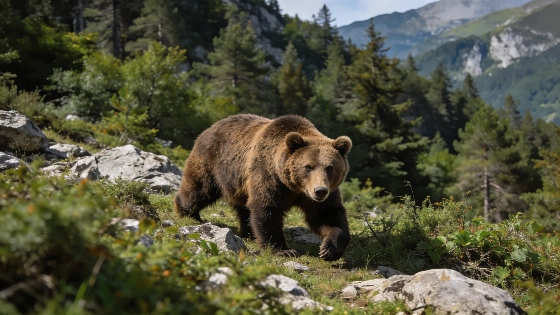
Spain’s brown bear population has rebounded from fewer than 70 to over 400 in thirty years. New genetic estimates highlight both progress and ongoing challenges as bears expand into new regions, raising questions about coexistence and future risks.
In 2025, Spain’s Ministry for Ecological Transition confirmed a milestone: the country’s brown bear population has climbed above 400, a dramatic turnaround from the fewer than 70 individuals counted in the early 1990s. This recovery, driven by decades of coordinated conservation, now brings new complexities as bears reclaim territory across the Cantabrian Mountains and the Pyrenees.
Genetic analyses place around 370 bears in the Cantabrian range, with the remainder in the Pyrenees, where cross-border monitoring identified at least 108 different animals in 2025. However, these figures reflect different methods and timeframes, so they cannot be simply combined as a snapshot of Spain’s total bear numbers. The Cantabrian population remains largely native, split between western and eastern groups, while the Pyrenean bears descend mainly from Slovenian individuals released since 1996. Movement of males has helped reduce genetic isolation, but female dispersal remains limited, especially in the Cantabrian region.
Natural Expansion and New Frontiers
Recent studies show brown bears are steadily expanding into areas like Cabrera, La Carballeda, and Sanabria. Between 2012 and mid-2025, researchers documented 85 confirmed bear signs—tracks, photos, hive damage, and genetic samples—across 34 new 10-kilometer grid squares. Some evidence suggests stable presence, but experts call for more systematic monitoring. The bears are recolonizing landscapes where they vanished for decades, with the occupied area reaching nearly 18,800 square kilometers by 2024. These mountain corridors are now seen as strategic for reducing isolation and supporting further recovery.
Recovery Brings New Risks
Despite the population boom, the brown bear remains officially endangered in Spain. The resurgence is not simply the result of ending poaching, but of sustained efforts to restore habitats, protect sensitive areas, and coordinate between regional governments. Yet, threats persist. Climate change is altering food availability—blueberry harvests are less predictable, some forests may shrink, and hibernation periods are shortening. The LIFE Osos con Futuro project has responded by planting 150,000 trees and shrubs, including 25,000 local chestnuts, to support bear diets.
As bears move closer to villages, orchards, beehives, and roads, the risk of conflict grows. Limiting access to human food sources is now a priority to prevent bears from becoming habituated to people. These challenges echo the need for prevention in areas where wildlife accidents are common, a topic also explored in reports such as recent coverage of unexpected risks in daily life.
New Protocols for Coexistence
On June 22, 2026, Spain’s environmental authorities approved an updated protocol for managing bears that are injured, habituated, or pose problems. The guidelines, now in force in Galicia, Asturias, Cantabria, and Castilla y León, set out clear procedures for intervention teams, deterrence, veterinary care, and, if necessary, capture and release. The protocol emphasizes both public safety and strict protection of the species, with graduated responses depending on the bear’s behavior and risk level. It also covers abandoned cubs and injured animals, aiming for consistent action across regions.
Spain’s brown bear comeback is a conservation success, but its future depends on continued habitat protection, vigilant monitoring, and public acceptance. As the bears reclaim their place in the country’s wild landscapes, the balance between recovery and coexistence remains a delicate one.