Spain's economy grew by 0.7% in the second quarter and by 2.6% from a year earlier. Household spending and investment drove the rise, while fresh food prices climbed much faster than the average basket.
In the second quarter, Spain's economy grew by 0.7%, according to the Instituto Nacional de Estadística, or INE. That was one tenth higher than in the previous three months. Household consumption and investment did most of the work. Fresh food prices moved much faster than the average shopping basket.
The gap is easy to see in weekly shopping. Fresh food prices rose by an average of 4.7% this year, according to the annual study by the Organización de Consumidores y Usuarios. The economy also grew by 2.6% from the same quarter a year earlier, based on the latest national-accounts release.
Spain’s GDP grew by 2.6% year on year in the second quarter of 2026, while the main contribution came from domestic demand rather than the external sector.
The full shopping basket became 1.8% more expensive. That was less than last year's increase. The detail is harsher. Meat prices rose by 3.7% and fish by 8.6%. Several fruit and vegetable products went up even more. OCU said prices increased for 61.8% of the products in its basket.
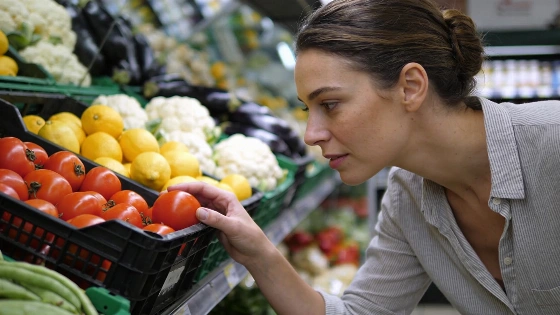
Some items rose sharply. Tomatoes went up by 33%. Lemons increased by 25%, cauliflower by 23% and aubergines by 20%.
The choice of supermarket can materially change the annual food bill: OCU estimates a difference of about €1,310 between the most and least expensive options in its comparison. That means household pressure depends not only on the average inflation rate but also on where consumers shop.
Domestic demand carried more weight than earlier figures showed. Household consumption rose by nine tenths to 1.2%. Business investment accelerated by 1.5 points to 1.7%. Final consumption by public administrations stayed at 0.5%. The figures point to an expansion led by spending inside Spain.
Investment in housing, other buildings and construction rose by 0.5%. It had increased by 0.1% in the previous quarter. Investment in intellectual property products accelerated by 1.5 points to 3%. The Ministerio de Economía links that rise to the modernisation of the economy.
Foreign demand offered less help. Exports increased by 1%, one tenth more than in the first quarter. Imports grew by 2.6%, up 2.5 points. RTVE reported that this pattern cut the foreign sector's contribution by about half a percentage point. Internal demand was stronger. Exports were not the main source of growth.
The revised figures identify the immediate engine of the expansion. Households and companies spent more inside the economy. They also show why strong headline growth does not bring equal relief to every family. A stronger labour market may help a household while basic fresh products cost considerably more.
For families, the most visible part of the report is not the national accounts. It is the produce counter. The average basket has risen less than last year, but the price of tomatoes, lemons, cauliflower and aubergines changes the weekly bill.
That is the tension. Spain's economy grew by 0.7% in the quarter, supported by consumption and investment rather than foreign demand. Fresh food prices rose much faster than the basket as a whole. The recovery is present in the data. At the checkout, its benefits are weaker for products households cannot easily avoid.